
Last updated November 23, 2026
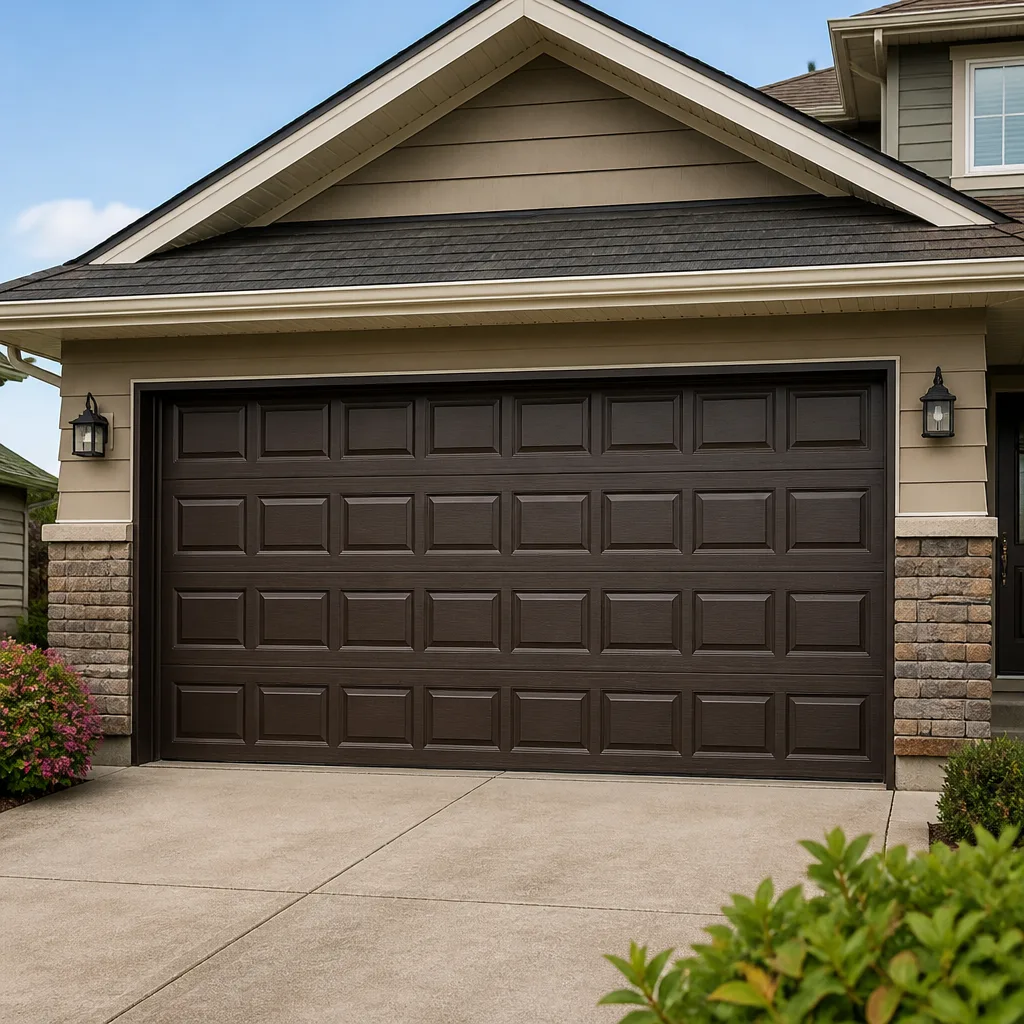 Raised-panel steel
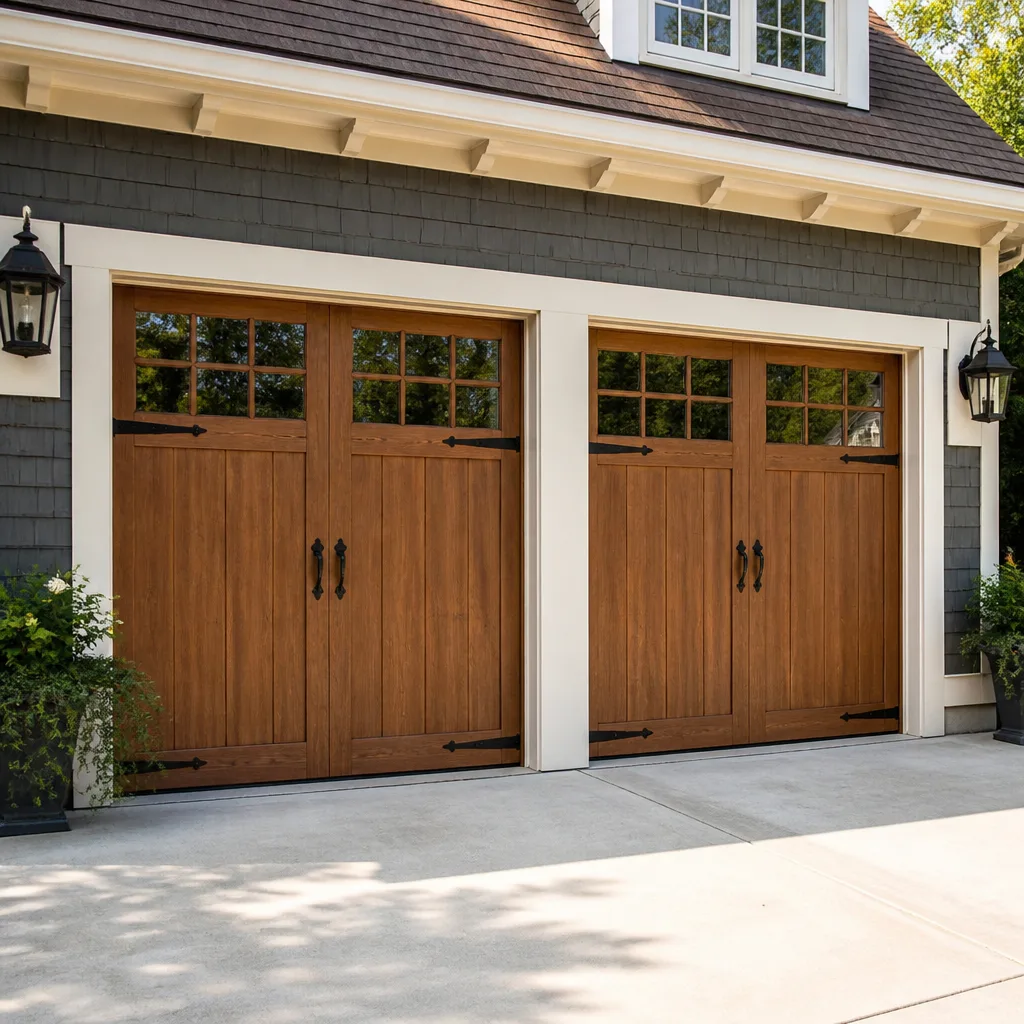 Carriage house
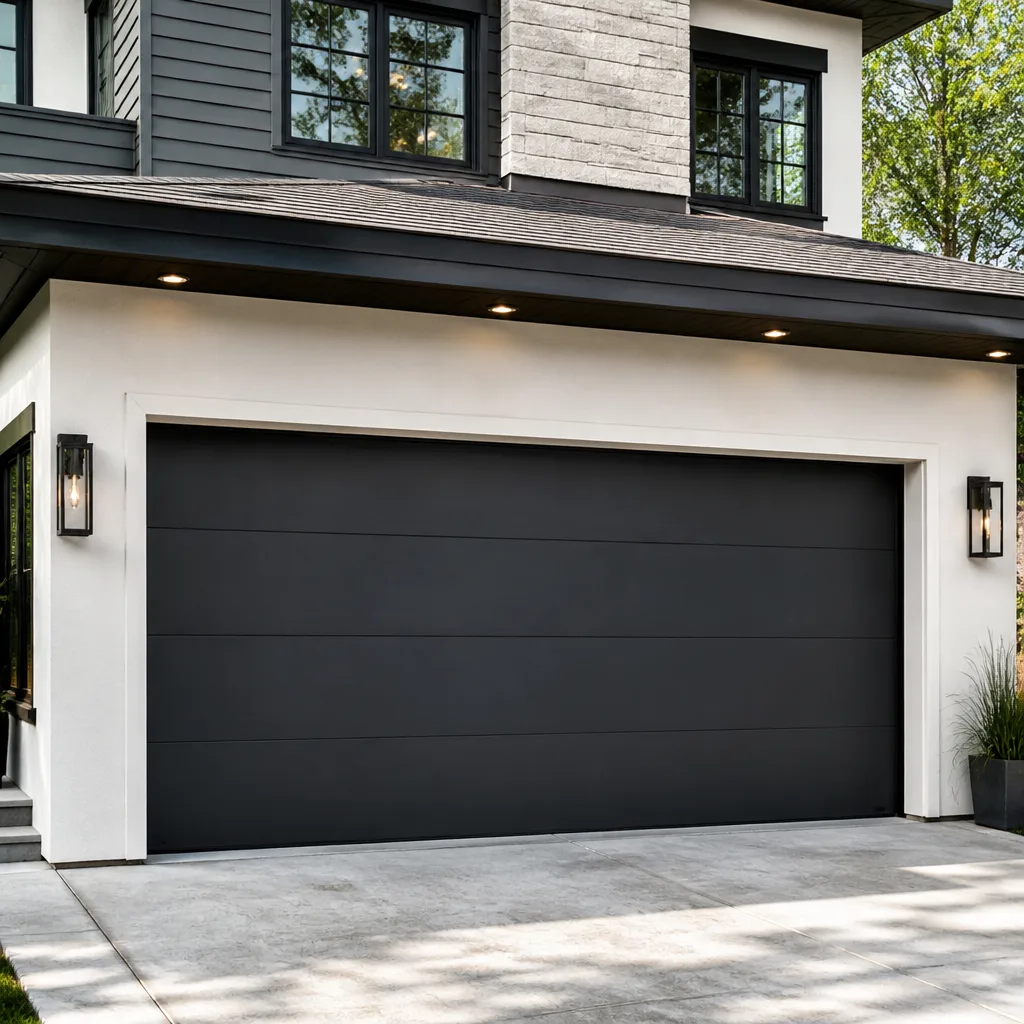 Modern flush
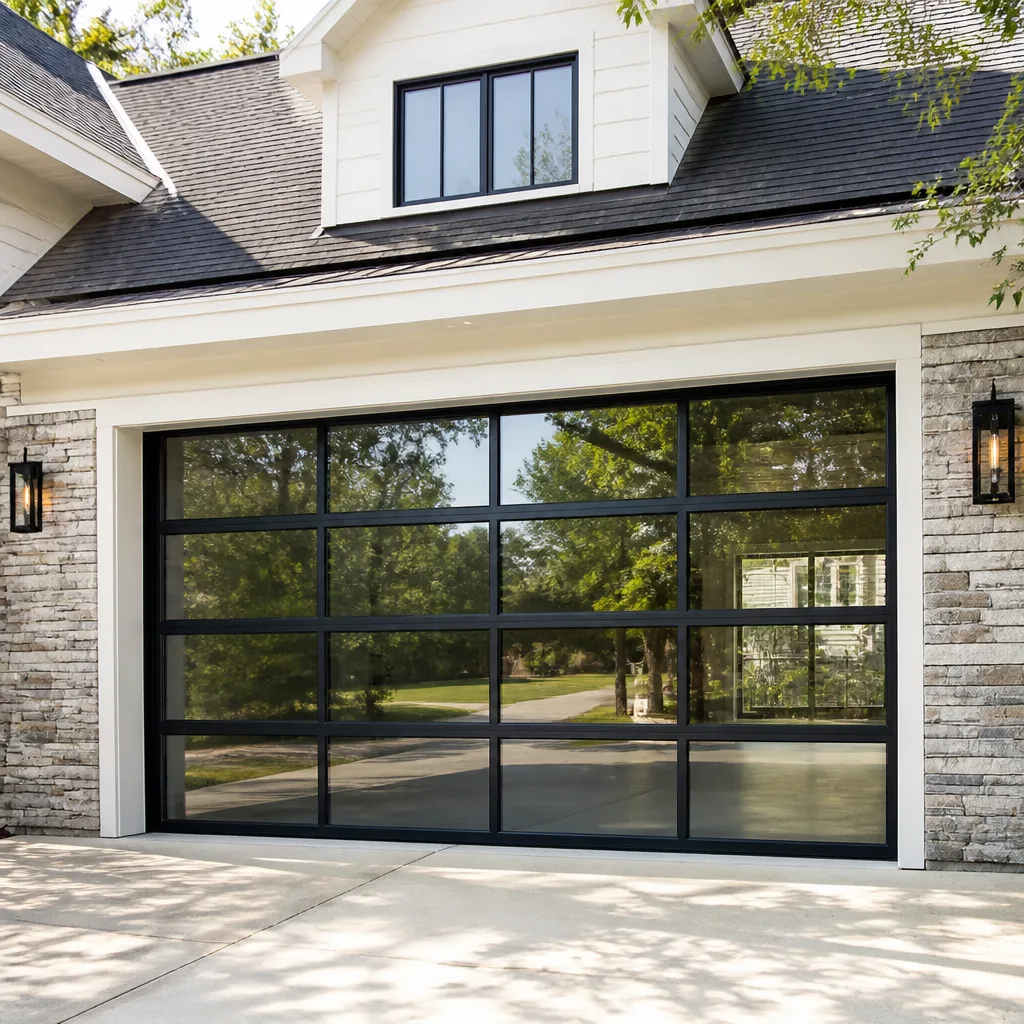 Full-view glass
 LiftMaster openers
 Chamberlain openers
Full 25-point door and opener safety check with every visit - springs, cables, rollers, tracks, and your LiftMaster or Chamberlain opener included
You get a price before we start. It does not change when the pro arrives.
Get your free estimateGarage Door Emergency Preparedness Guide for Jupiter Homes
Most homeowners think of a garage door emergency as a sudden event. In Jupiter, that’s only half the story. When a hurricane watch is issued for Palm Beach County, Jupiter residents have roughly 36 hours to prepare. For most homeowners, the garage door is the largest, most wind-vulnerable opening on the structure, but it’s also the last thing they think about until the news anchor mentions it. The other half of the story is the mechanical failure that arrives with zero warning: a snapped torsion spring, an opener that dies mid-cycle, a door that comes off its track with the car trapped inside. This guide walks through both. You’ll learn how to check your door’s wind rating before storm season, how to safely disconnect and re-secure a dead door, how to inspect for real damage after a storm passes, and what to document now so you’re not searching for model numbers while a panel hangs off its track.
Quick Answer
Garage door emergency preparedness in Jupiter means preparing for two different threats: storm-driven damage that gives you hours or days of warning, and mechanical failures that give you none. Before a storm, confirm your door’s wind load rating against current code and know how to disengage your opener without power. After a mechanical failure or storm, secure the opening first, assess structural versus cosmetic damage, and call a technician before operating a door that’s off track. The single most useful habit is documentation: model numbers, warranty contacts, and your insurer’s process, collected before you need them.
Styles & brands we work with
- Raised-panel steel
- Carriage house
- Modern flush
- Full-view glass
- LiftMaster openers
- Chamberlain openers
Table of Contents
- The Two Kinds of Garage Door Emergencies in Jupiter
- Pre-Storm Protocol: Verifying Your Wind Load Rating Before It Matters
- Manual Disconnect: Operating Your Door When the Power Is Out
- Post-Storm Damage Assessment: Structural vs. Cosmetic
- Emergency Security When Your Door Won’t Close
- What to Document Before an Emergency
- Brand-Specific Preparedness Notes
- Common Mistakes to Avoid
- When to Call a Professional
- Frequently Asked Questions
The Two Kinds of Garage Door Emergencies in Jupiter
Not every garage door emergency in Jupiter looks the same, and the difference matters for how you prepare. Storm-driven failures come with warning. Mechanical failures don’t. Treating both the same way means you’re either over-preparing for one or under-prepared for the other.
Storm-driven failures. These are the ones tied to hurricane season. Wind pressure on a garage door is real, and it’s concentrated on the largest unsupported opening on your house. A door that meets the current wind load standard is built to take that pressure. A door that doesn’t can fail in ways that compromise more than the door itself. The preparation window here is measured in hours or days, which is why Jupiter homeowners who verify their door’s rating in the off-season have a real advantage over the ones who do it while the storm is already tracking north.
Mechanical failures. These are the ones that happen at 8pm on a Sunday with your car inside. A torsion spring snaps. An opener motor burns out. A door jumps its track because a roller wore out and nobody noticed. There is no warning window, which is why the response plan matters more than the prevention plan. Knowing where your manual release is, and how to use it, changes a panicked evening into a manageable one.
Here’s why the distinction matters in Jupiter specifically: the same geography that brings storm exposure also brings humidity and heat that wear certain components faster. Springs, rollers, and opener gears don’t fail because of one dramatic event. They fail because of cumulative wear, and the failure just happens to show up during a storm or a busy morning. We’ve seen Jupiter homeowners assume a jammed door was storm damage when it was really a worn spring that had been weakening for months.
Prepare for both. The storm protocol below is calendar-driven. The mechanical protocol is habit-driven. Together they cover the realistic range of what actually happens to a garage door in Jupiter.
Pre-Storm Protocol: Verifying Your Wind Load Rating Before It Matters
When a hurricane watch is issued for Palm Beach County, the window to prepare is short. That’s not the time to be reading a spec sheet for the first time. The work of verifying your garage door’s wind load rating should happen now, in the off-season, so that when a watch is issued you’re confirming a known fact instead of discovering an unknown one.
South Florida falls within the High-Velocity Hurricane Zone (HVHZ), which sets elevated wind load requirements for building products including garage doors. Whether your specific door meets the current standard depends on when it was installed, what it was rated for, and how it’s anchored. Two doors built to the same general design can have very different ratings depending on the hardware and bracing used at installation. We can’t tell you from here whether your door qualifies, and neither should anyone who hasn’t looked at it. What you can do is organize the check before the storm.
Here’s the sequence we recommend:
- Find the label. Most garage door panels carry a wind load rating label, often on the inside of the door or on the frame. Photograph it while conditions are calm. If it’s faded or missing, note that too.
- Check your installation records. Your door’s permit and installation paperwork, if you have it, will show what the door was rated for at the time it went in. If you bought the house recently, ask the seller or check the closing documents.
- Look at the bracing. Storm-rated doors typically have horizontal and vertical reinforcement, and heavier anchors at the tracks and hinges. If your door looks like a standard panel with no added bracing, it’s likely not storm-rated.
- Ask the building department. Palm Beach County and the Town of Jupiter can confirm what requirements applied when your home’s door was permitted. That record is more reliable than any guess from the street.
- Book an assessment before storm season, not after. A technician can tell you in a single visit whether your door and its hardware meet the current standard, and what, if anything, needs to change.
If your door doesn’t meet the current HVHZ requirement, the fix isn’t necessarily a full replacement. In some cases, reinforcing hardware or upgraded tracks and anchors bring a door into compliance. In others, a new door is the honest answer. Either way, that decision is far easier to make in April than in the 36 hours before a watch becomes a warning. If you need a professional eye on the door, garage door repair covers exactly this kind of assessment.
Manual Disconnect: Operating Your Door When the Power Is Out
When the power goes out, most garage doors can be operated by hand. The mechanism is a manual release, usually a red cord or handle hanging from the trolley on the opener rail. Pulling it disengages the door from the opener, which lets you lift the door by hand. The steps are similar across brands, but the details differ enough that it’s worth knowing your specific system before you need to use it. Here’s how the procedure works by brand.
LiftMaster and Chamberlain (both use the same basic trolley design): the manual release is a red cord hanging from the trolley. Pull it down and toward the door to disengage. On some newer units the release is a small handle rather than a cord; the pull direction is the same. To re-engage, lift the door fully open, pull the release cord toward the opener until it clicks, then operate the door with the opener to confirm.
Genie: the release is typically a red T-handle or cord. The disengagement motion is a pull straight down, followed by a slight pull toward the door to release the trolley. Re-engaging is the same sequence in reverse: door fully open, handle pulled toward the opener, then a full test cycle.
Raynor: release placement varies by opener model. Look for a red or colored handle near the trolley. The disengagement and re-engagement sequence follows the same principle: door open, mechanism pulled to release, then pulled back to lock. Raynor openers paired with Raynor doors are common in this area, and the release points are consistent within the brand.
Two things matter regardless of brand:
- Never disengage a door that’s mid-travel or partially open. Disengage only when the door is fully closed or fully open. A door that’s halfway up can slam down when the opener lets go.
- A door with a broken spring should never be operated by hand. The springs carry the weight. If one has failed, the door becomes dangerously heavy and can fall without warning. This is the one case where you call a professional before you touch the door.
Test the manual release on a calm day, with the door closed, and re-engage it the same afternoon. That way, when the power actually goes out, you’re not learning the procedure from memory under pressure. If your opener itself has failed and the manual release doesn’t help, garage door opener repair is the next step.
Post-Storm Damage Assessment: Structural vs. Cosmetic
After a storm passes, the question isn’t just “does the door look damaged?” It’s “is this door safe to operate?” Those are different questions, and confusing them is how small damage becomes a much larger repair. A systematic inspection sequence, done in the same order every time, tells you whether you’re looking at a cosmetic issue or a structural one.
Work through these steps in order. Stop and call a technician at any point if something feels unsafe.
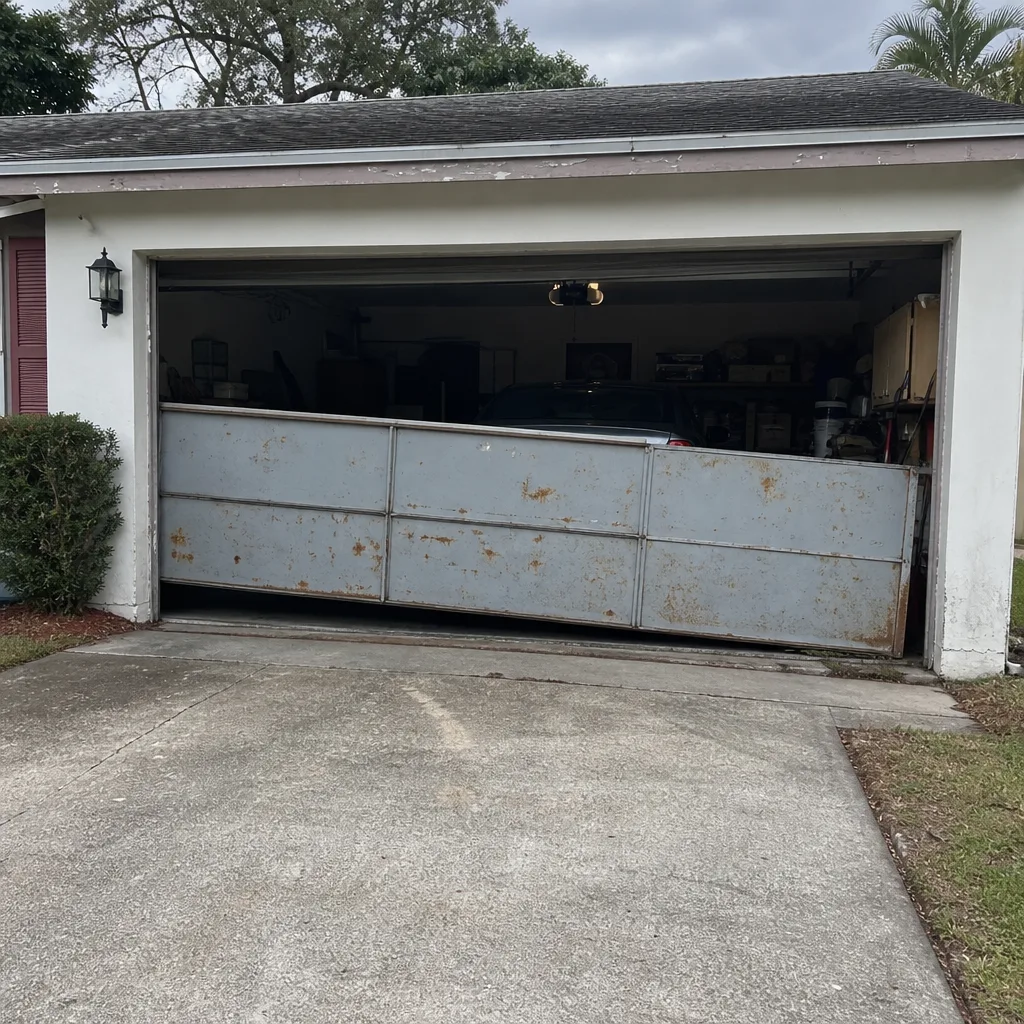
- Look at the door from outside, from a distance. Is the door sitting square in the opening? Are the gaps even on both sides? A door that’s visibly crooked has a structural problem, not a cosmetic one.
- Check the tracks for bends or separation from the frame. Tracks that have pulled away from the wall, or bent inward, mean the door’s path is compromised. Don’t try to straighten them yourself.
- Inspect the panels for impact damage. Dents, cracks, and punctures are visible from the ground. A panel that’s cracked is a structural concern because it can fail under load.
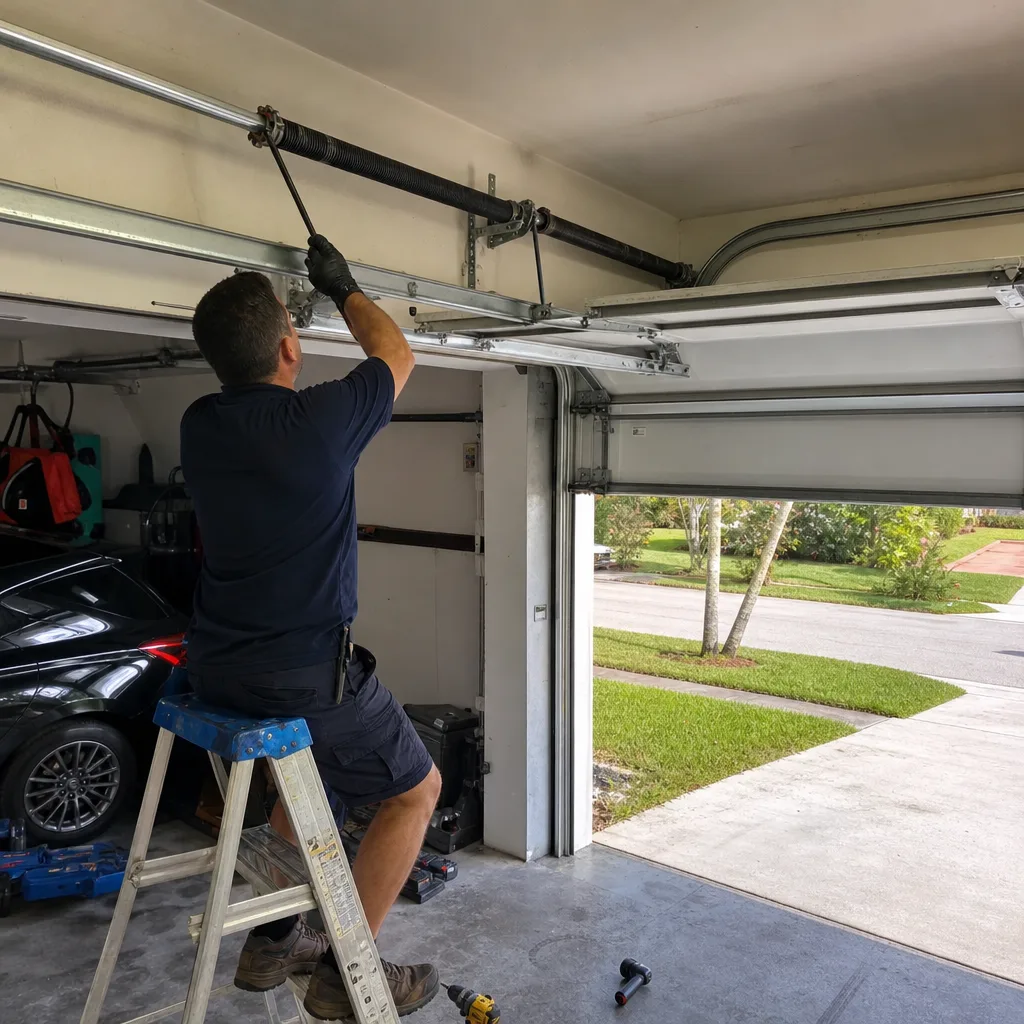
- Look at the springs and cables. A spring with a visible gap is broken. Cables that are slack or off their drums are a serious safety concern. Never touch a cable under tension.
- Look at the hinges and rollers. Hinges that are bent or rollers that have come out of the track are repairable, but they mean the door isn’t safe to operate until they’re fixed.
- Operate the door once, from a safe distance, and watch it travel. If it moves smoothly and closes flush, the door is probably fine. If it jerks, binds, or stops partway, stop operating it and call for service.
In our experience, the most common miss is a door that looks fine from the driveway but has a bent track or a partially failed spring. Those problems don’t always show up in a quick visual pass. If anything about the door’s operation feels different after a storm, get it looked at before you keep using it. Damage that starts small can take the whole door out of commission if it’s left alone.
Emergency Security When Your Door Won’t Close
A garage door that won’t close is a security problem, not just an inconvenience. The opening is exposed, and depending on your setup, that opening may connect directly into the house. The goal is to secure the opening without making the repair worse. That means methods that don’t bend tracks, don’t force panels, and don’t add damage on top of what’s already there.
Here’s what actually works:
- Close the door by hand if the mechanism allows it. If the door isn’t broken and the issue is the opener, disengage the opener using the manual release and lower the door manually. This is the cleanest fix and usually the fastest.
- Use the manual lock if your door has one. Many doors have a manual lock bar or a slide bolt on the inside. If you can close the door by hand, lock it and secure the opening from the inside.
- Brace from the inside, not the outside. A piece of lumber or a heavy furniture item placed against the inside of a closed door adds resistance to forced entry. This is a temporary measure, not a repair.
- Don’t force a door that’s off track. If the door is off its tracks, forcing it closed will bend the tracks further and possibly damage the panels. Leave it where it is and secure the opening another way, such as blocking the interior doorway that leads into the garage.
- Don’t prop a door open on a storm night. If the door is stuck open and a storm is coming, the safest move is to block access to the garage from inside the house rather than trying to solve the door in the dark.
What doesn’t work: wedging something under a door that’s off track, forcing panels back into alignment by hand, or trying to bend tracks back into shape. All three turn a repair into a replacement. Sometimes the safest thing you can do is secure the house and call for help.
If the door is stuck and you need it working again, our Jupiter Garage Door Repair Co team handles emergency calls as a standard service, not a special tier. We answer 24/7. Fast dispatch from 7am to 7pm, Sunday through Friday. A call outside dispatch hours is booked into the next opening.
What to Document Before an Emergency
The worst time to look for your garage door’s model number is when the door is hanging off its tracks. Documentation is the least glamorous part of emergency preparedness and the one most homeowners skip. It’s also the part that saves the most time when something actually goes wrong.
Put together a single file, digital or physical, and keep it somewhere you’ll actually remember. It should contain:
- Door model and serial number. Usually on a label inside the door or on the frame. Photograph it, front and back.
- Opener model and serial number. On the opener housing, usually on the back or side. Photograph it too.
- Installation records. The original install paperwork, permit, and any warranty documents. If you don’t have them, the building department may have the permit on file.
- Warranty contact information. Most door and opener warranties are held by the manufacturer. Know who to call for what. A warranty claim goes to the manufacturer, not to the installer.
- Your insurer’s claim process. Your homeowners policy likely covers storm damage to the garage door. Know how to open a claim before you need to. A phone number and a claims portal login are the two most useful pieces of information in the file.
- Photographs of the door in its current condition. Before-and-after photos support any future claim. Take a full set now, while the door is intact.
The goal isn’t a perfect file. It’s a file that’s good enough to answer the questions a technician or an insurer will ask. If your door was installed by a previous owner and you don’t have the records, start with what’s visible on the door and opener labels and add to it from there. Two minutes of photographing now saves an hour of searching later, and it means the technician who arrives already knows what they’re working on.
Brand-Specific Preparedness Notes
Part of what makes a preparation plan useful is knowing your specific system. The brands we see most in Jupiter are also the ones with the most documented quirks, and those quirks change how you prepare. Whatever brand is on your door, we know it, but here’s what you should know about yours.
LiftMaster and Chamberlain. These openers share a family of designs, which means the manual release and the safety reverse system behave similarly. The safety reverse is the feature that stops the door if it hits something on the way down. Test it once a season by placing a piece of wood flat on the ground under the door and watching whether the door reverses on contact. If it doesn’t, the opener needs adjustment before it becomes a safety problem.
Genie. Genie openers are common on older Jupiter installations. The main thing to check is the force setting. If the door has gotten heavier over time (which happens as springs weaken), the opener may be compensating with more force than it should. That’s an adjustment issue, not a door issue, but it shows up as a door that slams or struggles. A technician can check the force setting during a routine visit.
Raynor. Raynor doors are often paired with Raynor openers, and the pairing means the components are designed to work together. If you have a Raynor door, the door’s wind rating documentation is the important piece. Raynor’s storm-rated models are labeled as such, and that label is what matters for insurance and code questions.
For any brand, the same three preparation habits apply: know your manual release, test your safety reverse, and photograph your model labels. The differences between LiftMaster, Chamberlain, Genie, and Raynor are real, but the prep work overlaps enough that doing it once covers most of the bases. If your opener needs attention, our garage door opener repair covers all four of those brands and the rest of the eight we service.
Common Mistakes to Avoid
Most garage door emergencies get worse because of something the homeowner did between the failure and the technician’s arrival. Here are the ones we see most often, and what to do instead.
- Forcing a door that’s off track. A door that’s jumped the track and been forced back will usually bend the tracks and crack a panel. Leave it where it is and secure the opening another way. Forcing it guarantees a more expensive repair.
- Operating a door with a broken spring. The spring is what holds the door’s weight. When it’s broken, the door is far heavier than it looks, and it can drop on whoever is under it. Never lift a door with a broken spring by hand. This is the single most dangerous mistake on this list.
- Waiting until a watch is issued to check the wind rating. The 36-hour window before a Jupiter storm is not the time to discover your door isn’t rated for the current HVHZ requirement. Check it in the off-season, when there’s time to do something about it.
- Ignoring a slow-closing door. A door that’s gotten slower or heavier over a few weeks is telling you a spring or opener is weakening. Address it before it fails completely. A slow door is a warning, not a minor annoyance.
- Trying to straighten a bent track by hand. Tracks are load-bearing components, and a track that’s been forced back into place will bend again, usually worse. Leave the track alone and call for service.
- Not photographing model numbers until after the failure. A door hanging off its tracks makes it hard to read a label. Photograph your labels now, while the door is intact, and store the photos somewhere you’ll find them.
- Assuming the insurance will sort itself out. Your insurer needs documentation. Having the photos and model numbers on hand when you open a storm damage claim moves the process faster and makes it less likely the claim gets contested.
When to Call a Professional
Some garage door problems are genuinely dangerous, and the right move is to stop and call. If your door has a broken spring, a snapped cable, or has come off its tracks, it is not safe to operate by hand, and it’s not a job for a general handyman. Springs and cables are under high tension, and a door with a failed spring can fall on anyone standing under it. Call a trained technician and leave the door in place.
Other scenarios call for a professional visit even if the door is technically operable. A door that’s been struggling for weeks, an opener that’s been reset multiple times, or a door that’s had a spring replaced by someone who wasn’t sure what they were doing all warrant a proper inspection. Our technicians have up to 14 years of experience, including garage door spring repair, which is a named specialty for us and not something we hand off to someone else.
Jupiter Garage Door Repair Co offers free estimates in Jupiter. Call (877) 492-2107 to schedule an assessment before or after a failure. We answer 24/7. Fast dispatch from 7am to 7pm, Sunday through Friday. A call outside dispatch hours is booked into the next opening.
Frequently Asked Questions
Repair costs vary with the extent of the damage, because a bent track and a failed spring are different jobs with different parts and labor. The written estimate you receive before any work begins is the price you’ll pay, and it covers the specific repair your door needs. We don’t quote a single number for storm damage because the honest answer depends on what’s actually damaged. Call (877) 492-2107 for a free estimate.
Same-day service is available for garage door emergencies, which is why we treat emergency service as a standard offering rather than a limited window. We answer 24/7. Fast dispatch from 7am to 7pm, Sunday through Friday. If you’re calling outside those hours, we’ll book you into the next opening. Call (877) 492-2107 and we’ll confirm availability.
The price is set by the written estimate and agreed before any work starts, so there’s no surprise invoice after the repair. If the technician finds additional damage that changes the scope, that gets quoted and approved before any extra work begins. The estimate is free and there’s no charge for coming out to look at it. Call (877) 492-2107 to schedule.
The local professional we connect you with is licensed and insured as the state of Florida requires, and they perform spring and opener work regularly rather than occasionally. We’re trained on eight leading brands, including LiftMaster, Chamberlain, Genie, and Raynor, so whatever’s on your door is a system we already know. Call (877) 492-2107 to schedule a visit.
Confirm your garage door’s wind load rating against the current HVHZ requirement and make sure the door closes and locks securely. If your rating is uncertain, or your door shows signs of wear, that’s the time to secure the opening rather than test the door. If the door is off track or has a broken spring, do not try to fix it in the pre-storm window. Call (877) 492-2107 for an assessment.
Yes, most garage doors can be disengaged and operated manually using the release cord or handle on the opener trolley. The release is usually a red cord hanging from the trolley, and pulling it disconnects the door from the opener so you can lift the door by hand. Never do this on a door with a broken spring. If you’re not sure which handle to pull, call (877) 492-2107 and we’ll walk you through it.
See the difference
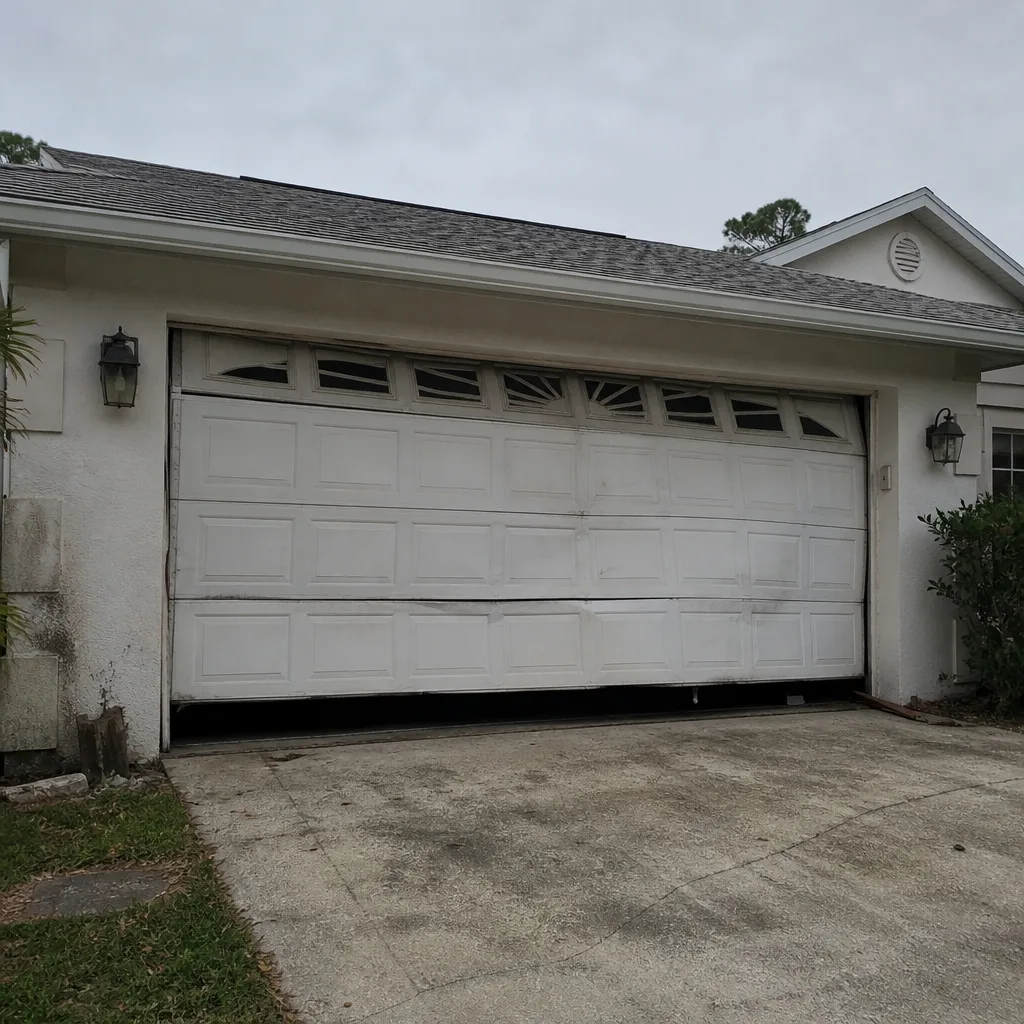 Before
 After
 Before
 After
 Before
 After
The Bottom Line
Garage door emergencies in Jupiter split into two categories, and being ready means preparing for both. Storms give you warning, which means the work of verifying your door’s wind rating belongs in the off-season, not in the 36-hour window before a watch. Mechanical failures give you no warning, which means knowing your manual release and never touching a door with a broken spring are habits worth building now. Documentation ties it together: model numbers, warranty contacts, and your insurer’s process, collected while the door is intact. The homeowner who’s done this preparation faces the same storm or the same snapped spring as everyone else, but they’re making decisions from a calm position instead of under pressure.
Contact
Whether you’re preparing ahead of storm season or dealing with a door that’s already failed, the next step is the same. Jupiter Garage Door Repair Co handles repair, opener repair, spring repair, and full installation across eight major brands, and emergency service is a standard offering, not a premium tier. The estimate is free and the price is agreed before any work begins.
Call (877) 492-2107 for a free estimate. We answer 24/7. Fast dispatch from 7am to 7pm, Sunday through Friday. A call outside dispatch hours is booked into the next opening.
Written by the team at Jupiter Garage Door Repair Co.