
Last updated November 23, 2026
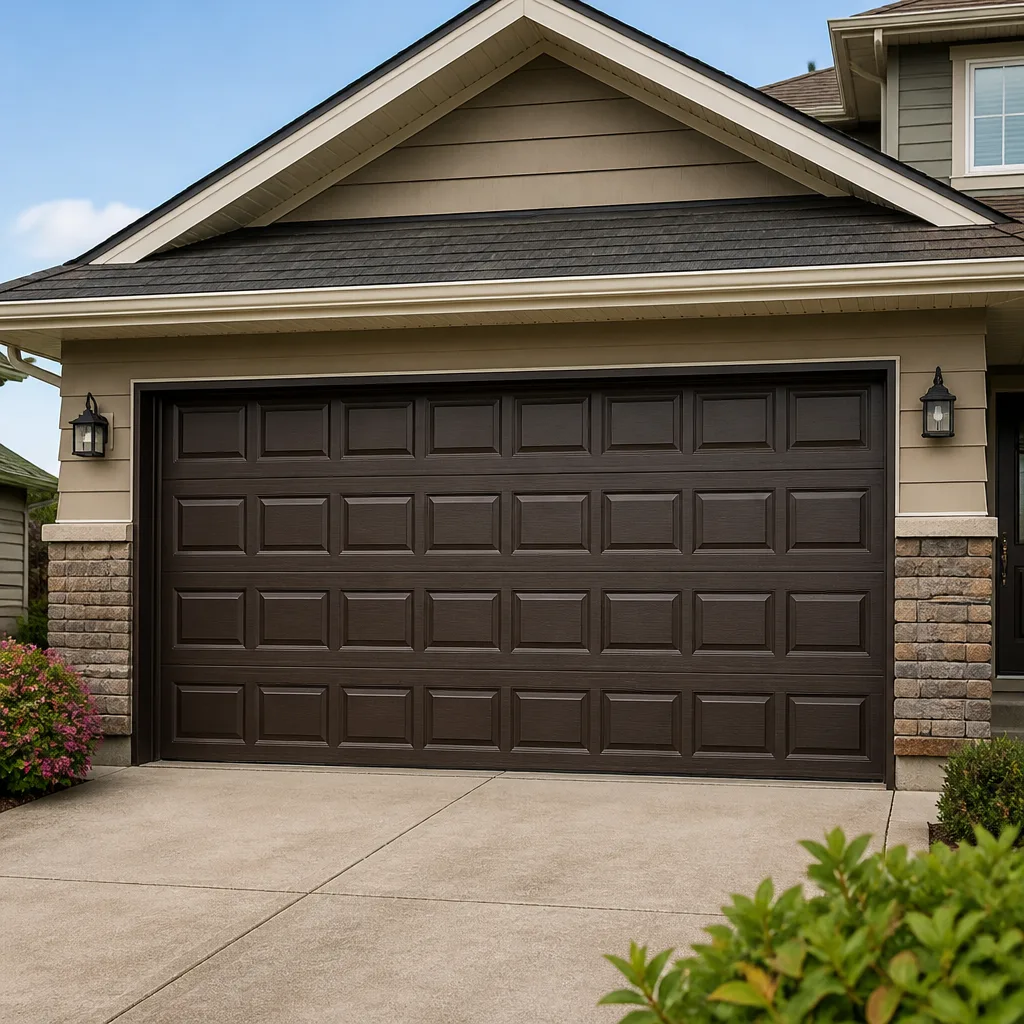 Raised-panel steel
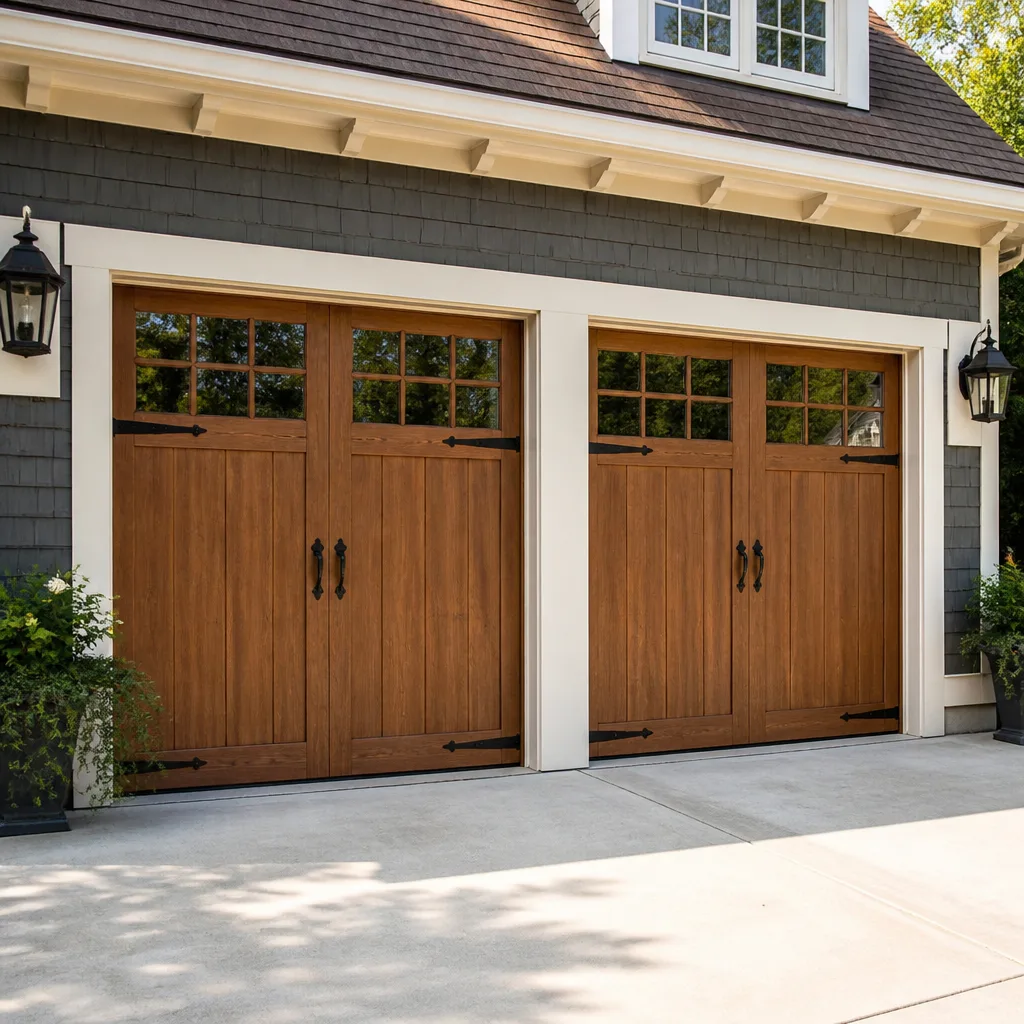 Carriage house
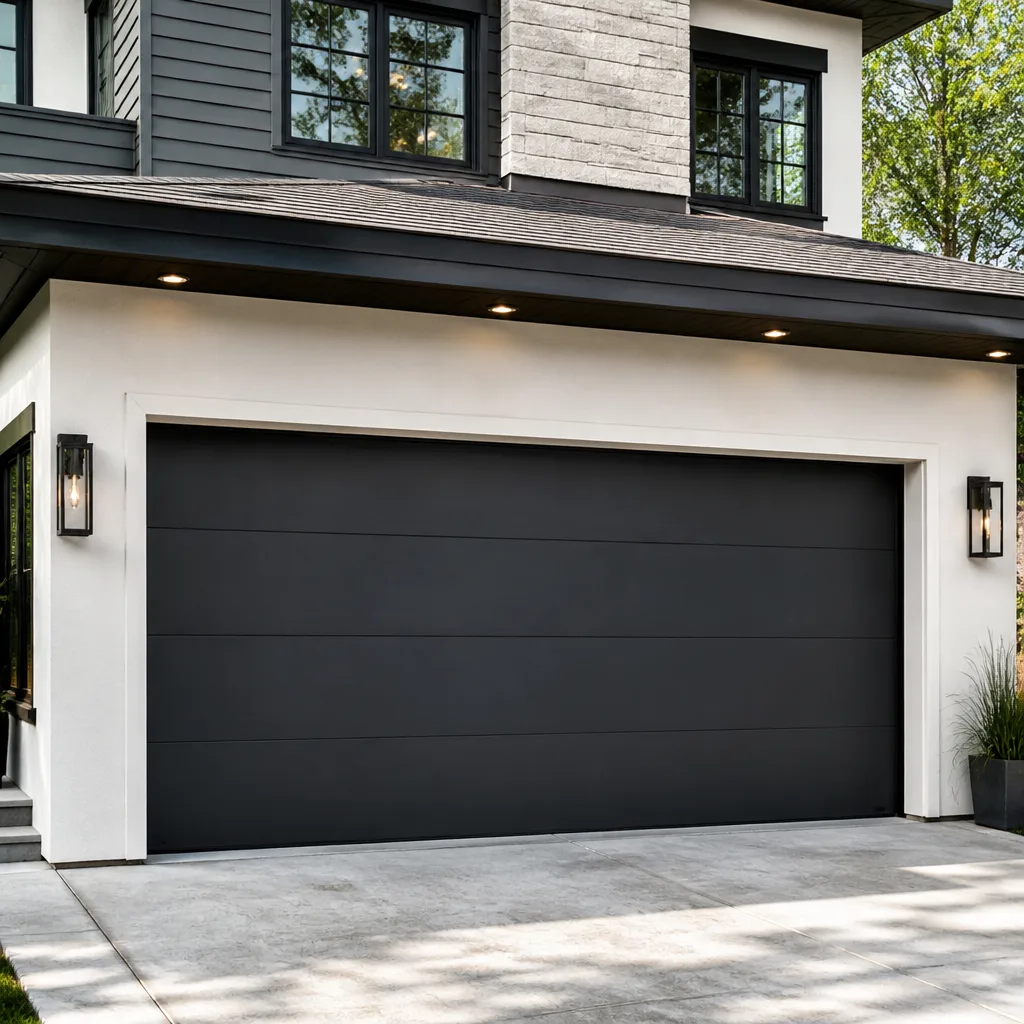 Modern flush
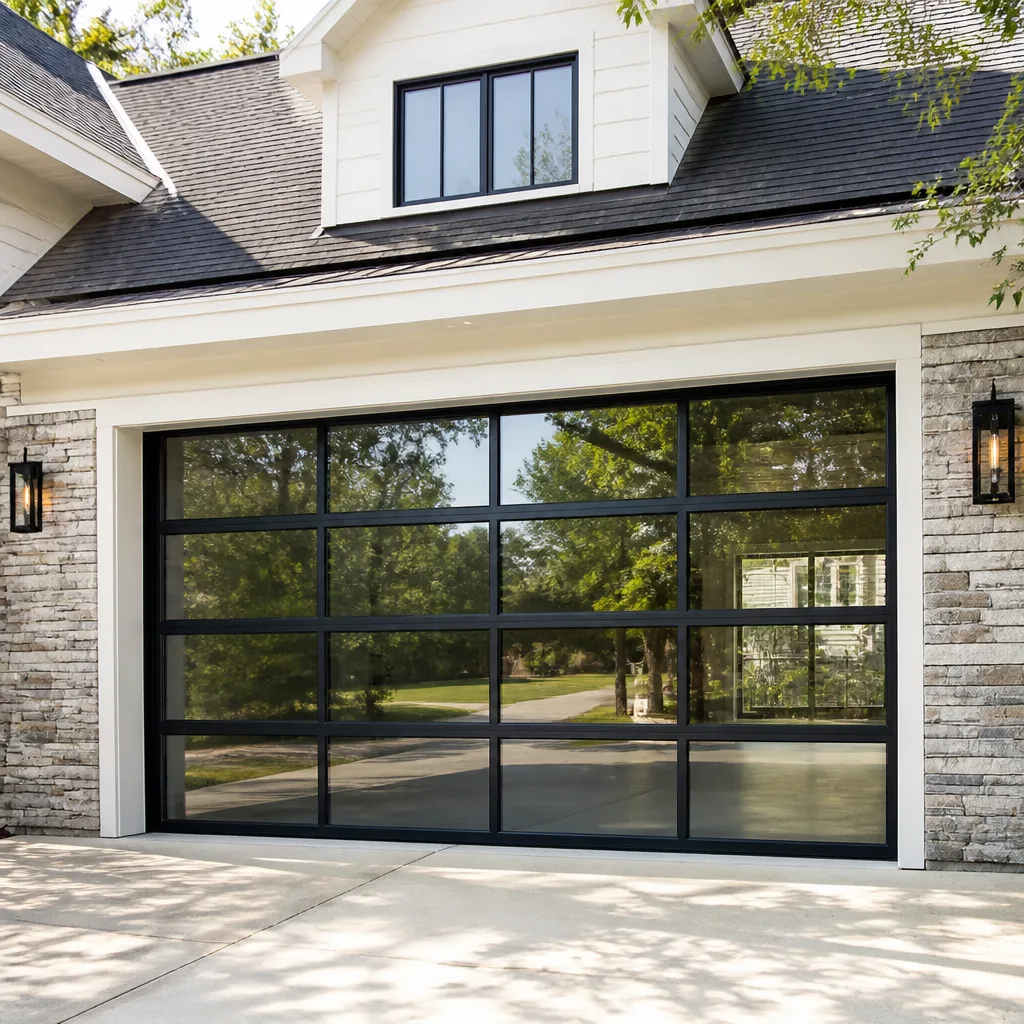 Full-view glass
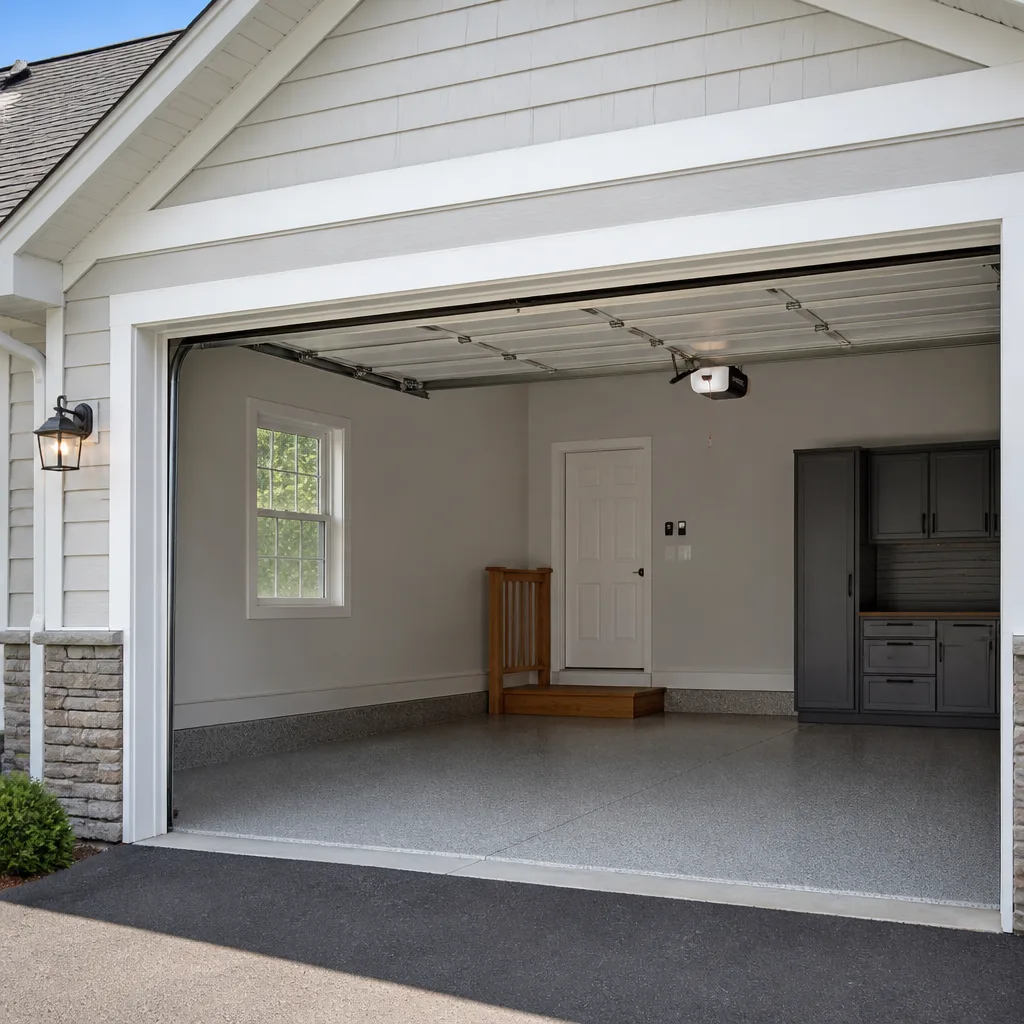 LiftMaster openers
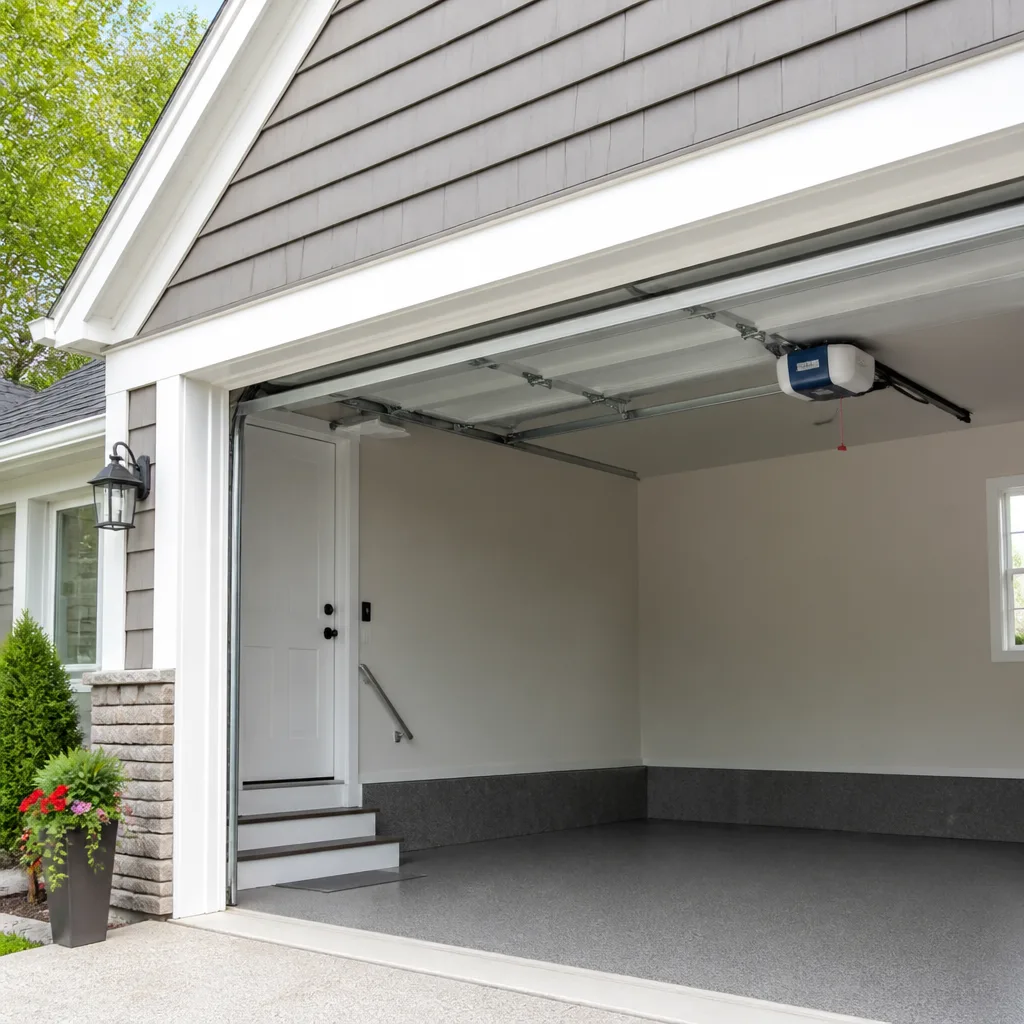 Chamberlain openers
Full 25-point door and opener safety check with every visit - springs, cables, rollers, tracks, and your LiftMaster or Chamberlain opener included
You get a price before we start. It does not change when the pro arrives.
Get your free estimateGarage Door Permits, Codes & Inspections in Jupiter, FL: What You Need to Know
If you sell a Jupiter home and the inspector finds an unpermitted garage door replacement, you typically face two choices: retroactive permitting, which requires the door to meet current code rather than the code in place when it went up, or replacement. Either path usually costs more than the permit would have. That’s the part most homeowners miss. A garage door feels like a simple swap, so people treat it like changing a light fixture. In Jupiter, it isn’t. This guide walks through when a permit is required and when it isn’t, how Florida’s product approval system works for the door itself, what an inspector actually looks at, and why your insurance carrier cares about the paper trail long after the door is up.
Quick Answer
In Jupiter, a full garage door replacement almost always requires a building permit through the Palm Beach County system, while swapping a like-for-like door, replacing a spring, or repairing an opener usually does not. Any door being permitted must carry a valid Florida Product Approval number and meet High Velocity Hurricane Zone requirements, which is stricter than most of the rest of the state. The inspection that follows checks anchoring, track fastening, and product approval compliance, and the resulting record matters when you sell the home or file a storm claim.
Styles & brands we work with
- Raised-panel steel
- Carriage house
- Modern flush
- Full-view glass
- LiftMaster openers
- Chamberlain openers
Table of Contents
- When a Permit Is Required in Jupiter vs. When It Isn’t
- How the HVHZ Designation Changes What Door You Can Buy
- Verifying a Florida Product Approval Number Before You Buy
- What the Inspection Sequence Looks Like and What Inspectors Check
- How Unpermitted Work Affects Your Homeowner’s Insurance
- Checking Permit History on a Jupiter Home You’re Buying
- The Permit Process in Jupiter, Step by Step
- What Permitting Typically Adds to a Jupiter Garage Door Job
When a Permit Is Required in Jupiter vs. When It Isn’t
The line between a permit-required replacement and a permit-free repair is the single most misunderstood part of this whole subject. In Jupiter, the distinction usually comes down to whether the structural opening or the door’s rated assembly changes. A new door in the same opening with the same labeled product generally needs a permit. Replacing a torsion spring, repairing a track, or fixing a stubborn opener does not. That’s the threshold.
Here’s how it usually breaks down:
- Permit required: Installing a new garage door, replacing a door with a different model or material, changing the size of the opening, converting a manual door to an opener-driven door, or adding an opener to a door that never had one.
- Usually no permit: Swapping torsion or extension springs, replacing rollers, adjusting cables, replacing weather seals, or repairing an opener motor or logic board.
- Gray area, check with the city: Replacing a door with the exact same make and model already on the home, particularly if the old one is still rated and compliant. Some jurisdictions treat identical replacement as maintenance; others still require the permit to keep the record clean for resale. Ask the building department directly before you assume.
We get asked this constantly around Jupiter. Neighborhoods like Admirals Cove and Jonathan’s Landing, where homes often carry custom carriage-style doors, tend to trigger more permitting because the door models frequently change during upgrades. Abacoa and the more standard subdivision builds often stay simpler. The home isn’t what decides it. The door and the opening are.
How the HVHZ Designation Changes What Door You Can Buy
Palm Beach County sits inside Florida’s High Velocity Hurricane Zone, which is the state’s toughest wind standard. For garage doors, that means you can’t just buy any door from a big-box shelf and have it permitted. The door has to be tested and approved under the HVHZ rules, and it has to carry the documentation to prove it. That’s a real filter on the market.
What this means in practice for a Jupiter homeowner:
- The door assembly is evaluated as a system, including the panels, the track, the reinforcing hardware, and the anchoring method.
- A door rated for a lighter inland wind zone won’t satisfy the HVHZ requirement even if it’s structurally similar.
- Some brands and models are only approved with specific hardware packages, so a mixed installation using aftermarket brackets can void the approval.
- Product approvals can expire or be revised, and an older approval number may not be accepted for a new permit today.
This is where brand familiarity helps. Major door makers publish approval documentation for the specific models sold in the Florida market, and technicians who work with those lines regularly know where that paperwork lives. Our team works with doors from Clopay, Amarr, Wayne Dalton and Raynor among others, and the approval documentation question comes up on nearly every replacement job in Jupiter. If you’re pricing doors, ask for the Florida Product Approval number before you sign anything. A door without one can’t be permitted in Palm Beach County, which means you’re not really comparing apples to apples.
Verifying a Florida Product Approval Number Before You Buy
Every door approved for the HVHZ carries a Florida Product Approval number, usually formatted as FL followed by a five-digit number and a revision letter. That number is what the permit office will ask for. Verifying it is a five-minute task, and doing it before you buy saves a much larger headache after the door is ordered.
- Get the number in writing. Ask the door supplier or installer for the Florida Product Approval number for the specific model, size, and hardware configuration you’re buying. Not the brand’s general approval; the exact one for your installed assembly.
- Look it up in the state database. Florida’s Building Code Administrators and Inspectors Board and the Department of Business and Professional Regulation maintain the product approval database. Enter the number and read the technical evaluation, not just the header.
- Check the conditions. The approval specifies allowable sizes, design pressures by wind zone, and the anchoring method. If your installation doesn’t match the approval, the permit can be denied or the inspection failed.
- Confirm the revision is current. Product approvals get revised. The permit office wants a valid, current approval, not an old revision that’s been superseded.
- Save the documentation. Keep the approval number with your home records. When you sell the home or file a claim, that paper trail is what proves the installation was done correctly.
If a supplier can’t or won’t provide the approval number, that’s a signal to walk. Houses near the Loxahatchee River and the Jupiter Inlet Colony area face the same HVHZ rules as the rest of the county, so there’s no shortcut by geography. The door either carries the approval or it doesn’t.
What the Inspection Sequence Looks Like and What Inspectors Check
Once a garage door permit is issued, the work usually falls into one of two inspection sequences. Some jurisdictions allow a single “final” inspection after the door is fully installed. Others require a rough inspection before the door panels go up, followed by a final. The sequence is set by the permit, so read the card carefully before you schedule.
What an inspector is looking for on a garage door installation:
- Anchoring to the structure. The lag bolts or fasteners have to match the product approval. The right diameter, depth, and spacing, into the correct framing member or a rated substrate.
- Track and jamb fastening. Vertical and horizontal tracks secured per the installation instructions, with the specified fasteners and spacing.
- Product approval match. The door panels, reinforcing struts, and hardware installed exactly as the approval specifies. Substituted or omitted parts fail.
- Clearances and opening dimensions. The rough opening matches the door size the approval covers. Doors oversized for their approved range are the most common rejection reason we see.
- Balance and operation. In many cases the door needs to open and close cleanly and the safety reverse (on an opener-equipped door) needs to function.
The rough inspection, when required, happens before the door is dressed out. The inspector wants to see the fastening pattern and the framing before panels go up. The final happens after everything is in place. If your installer can’t explain which inspectons the permit calls for, or who’s scheduling them, that’s a warning sign. On our own projects, the sequencing conversation happens before the door is ordered, not after it’s hung, because a missed rough inspection can mean peeling panels back off.
How Unpermitted Work Affects Your Homeowner’s Insurance
Florida carriers have a direct line to permit records. During a storm claim, an adjuster or underwriter can pull the permit history on your address, and if a garage door replacement shows no permit, the claim can get complicated fast. That’s the detail most homeowners never think about until they need the policy to perform.
Here’s the practical exposure:
- The door may not be recognized as an approved improvement. If the door isn’t permitted and doesn’t have a documented product approval, the carrier can treat it as a pre-existing or non-compliant assembly. In the worst case, the door’s contribution to the loss gets disputed.
- Wind mitigation credits can be affected. Florida carriers offer credits for impact-rated openings and HVHZ-compliant assemblies. Without the permit and approval documentation, you may not be able to claim the credit, and the credit is often worth more than the permit fee over a few policy cycles.
- Disclosure issues at sale. A buyer’s inspector who spots unpermitted work can force a renegotiation, a retroactive permit, or a replacement door. Any of those costs more than the permit would have.
- Carrier scrutiny on older claims. When a claim involves a renovated opening, some carriers will ask for the permit proof before paying out on the door portion.
The bottom line is that permitting isn’t just about the city. It’s about keeping the insurance record straight, which for a Jupiter homeowner sitting in the HVHZ is more consequential than in most places. If you’re not sure whether your current door was permitted, a records check is worth doing before storm season.
Checking Permit History on a Jupiter Home You’re Buying
When you’re buying a Jupiter home, checking the garage door permit history is quick and worth building into your due diligence. Palm Beach County and the Town of Jupiter both maintain online permit portals that let you search by address. Missing records aren’t automatically a problem, but they do tell you what to ask about.
Here’s how to check:
- Pull the address on the town or county portal. Look for any garage door permit and its inspection results. A permitted replacement should show a final inspection pass.
- Compare the door on the home to the permit record. If the permit shows a specific model and the door on the home doesn’t match, that’s a flag. It can mean the door was swapped again without a permit.
- Check the product approval number on the door itself. Most HVHZ-approved doors carry a label or sticker with the Florida Product Approval number. Compare it to the record.
- Ask the seller for documentation. If the portal shows nothing, the seller may still have the installation paperwork, approval number, or inspection receipt.
- Treat a missing record as a negotiation item. An unpermitted replacement door is a real cost to resolve. It’s fair to ask the seller to handle it or to price it into the offer.
The Jupiter portal isn’t the only resource. A title search will show recorded permits and open violations, and the county’s building department can confirm whether a permit is still open or was properly closed. If you find an open permit, that’s a bigger deal than a missing one. Open permits can block a sale closing, so resolve them early.
The Permit Process in Jupiter, Step by Step
Once you’ve picked the door and confirmed the approval number, the permit application is usually straightforward. The sequence that tends to work well:
- Confirm the door model and its Florida Product Approval. Get the approval number in writing from the supplier.
- Have the installer prepare the application. The application needs the door specifications, the approval number, the site address, and the installer’s information. A licensed contractor typically handles this step.
- Submit through the town or county portal. Submit with the door specs and approval documents attached. Most rejections at this stage come from mismatched approval documentation or incomplete applications.
- Pay the permit fee and wait for issuance. Timelines vary by the department’s workload. A straightforward replacement in Jupiter typically moves through in a few business days once the application is accepted.
- Schedule the inspection(s) the permit requires. Rough before panels go up (when required), final after installation is complete.
- Keep the signed and inspected permit for your records. The final inspection must pass before the permit closes. An open permit on the record is worse than a missing one at resale.
If the work involves an opener addition or a door that requires new framing, the permit scope can expand and the inspection sequence changes with it. That’s why it’s worth having a garage door repair conversation early rather than after the door has been ordered. Sometimes what looks like a simple replacement turns into a framing job once the old door comes down, and knowing that before you file keeps the permit scope honest and avoids re-filing later.
What Permitting Typically Adds to a Jupiter Garage Door Job
There’s no single permit fee; Palm Beach County and the Town of Jupiter both publish their own schedules, and the fee usually scales with the valuation of the work. For planning purposes, most garage door replacement jobs in Jupiter fall into a modest permit fee plus the inspection costs, and the combined amount is generally small relative to the door and installation itself. Ask your installer to itemize the permit cost separately from the labor and materials so you can see exactly what the city is charging.
On the door and installation side, typical Jupiter estimates look roughly like this. These are estimates, not quotes, and the written estimate sets the final price:
- Single-car garage door, installed (HVHZ-approved): roughly $1,200 – $2,400.
- Double-car garage door, installed (HVHZ-approved): roughly $2,000 – $4,200, depending on material, insulation, and door style.
- Spring replacement (torsion or extension): roughly $180 – $340 per spring. A matched pair is usually replaced together, so a pair costs about twice that.
- Opener replacement (chain or belt, with install): roughly $320 – $650, depending on the model.
- Permit fee: set by the jurisdiction, not the installer. Ask for the itemized number.
The costliest version of this job is the one that has to be redone. A door installed without a permit that then fails inspection, or a door that can’t be permitted because the model isn’t approved, ends up costing the door plus the re-installation plus the retroactive permit. That’s why pricing the door and the permit together, up front, is the practical approach. When a door won’t open at all and you need a technician on-site, garage door spring repair and the opener side are where most of the emergency calls land. Permitting and inspections are measured, scheduled work, so the price conversation is the same: free estimate, written quote, agreed before any work starts.
Common Mistakes to Avoid
- Buying a door without checking the product approval. The most common costly mistake in Jupiter. A door that’s fine in another Florida market can’t be permitted here in the HVHZ, and the door then becomes a sunk cost.
- Assuming a like-for-like swap is always permit-free. Some Jupiter replacements do require a permit even when the new door matches the old one. Confirm with the building department before you skip it.
- Letting the installer skip the rough inspection when the permit calls for it. Once panels are up, getting back to the framing for a rough inspection means partial disassembly. Check the permit card before installation day.
- Not saving the approval number for the home’s records. The paper trail is what protects you at resale and on a storm claim.
- Ignoring an open permit on the record. Open permits can block a sale closing in Florida. If you’re selling, resolve them early; if you’re buying, treat them as a condition to close.
- Mixing hardware from another manufacturer. An approved assembly is approved with its specified hardware. Aftermarket brackets and fasteners can void the approval and fail the final inspection.
- Using the old door’s approval number for a new door. Products get revised. The approval that covered the door you’re replacing may not cover the door you’re buying today.
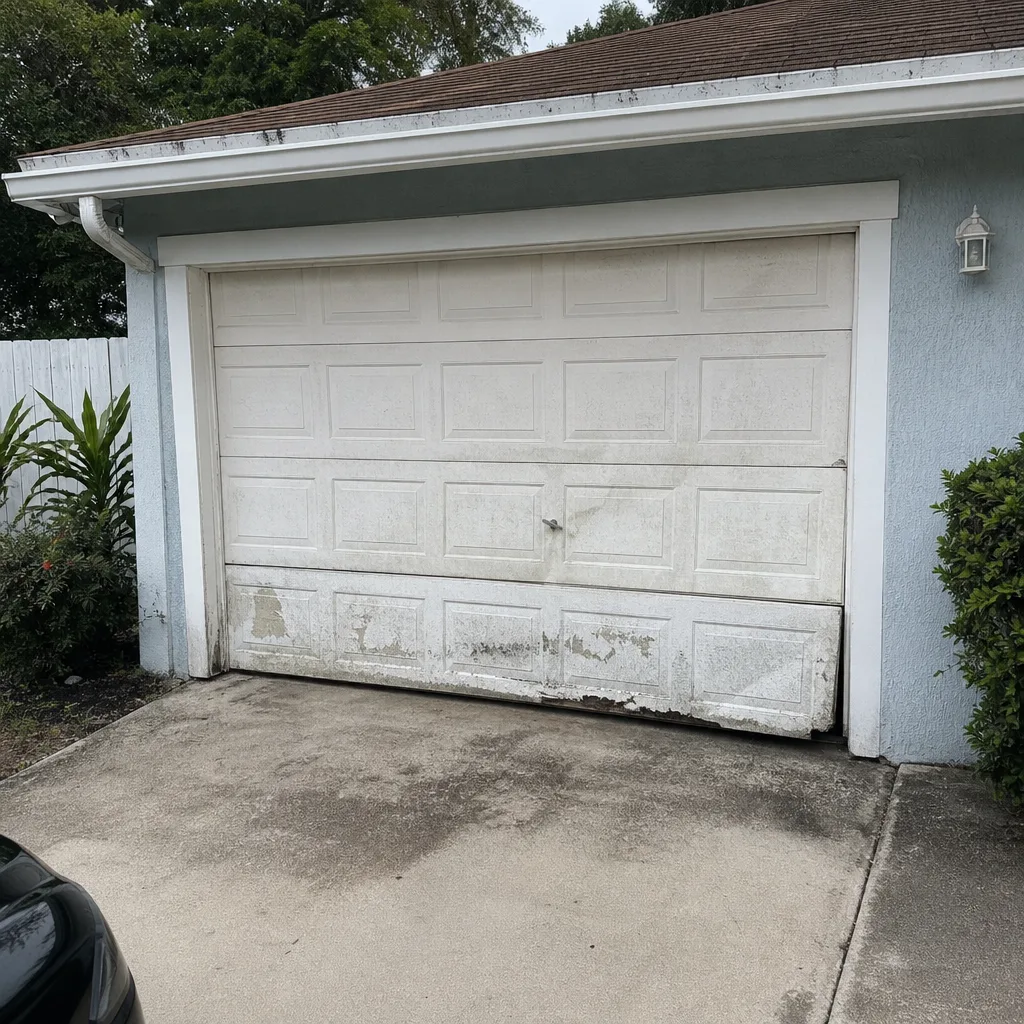
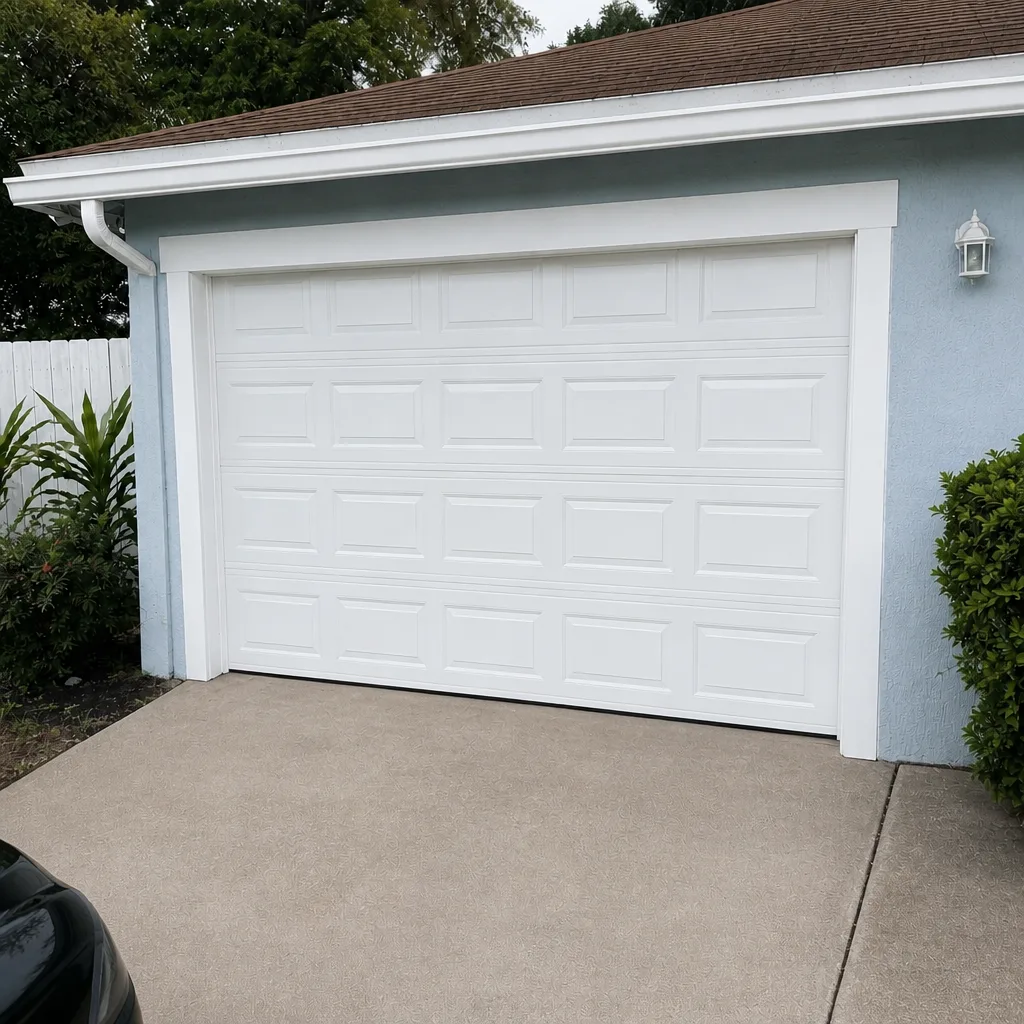
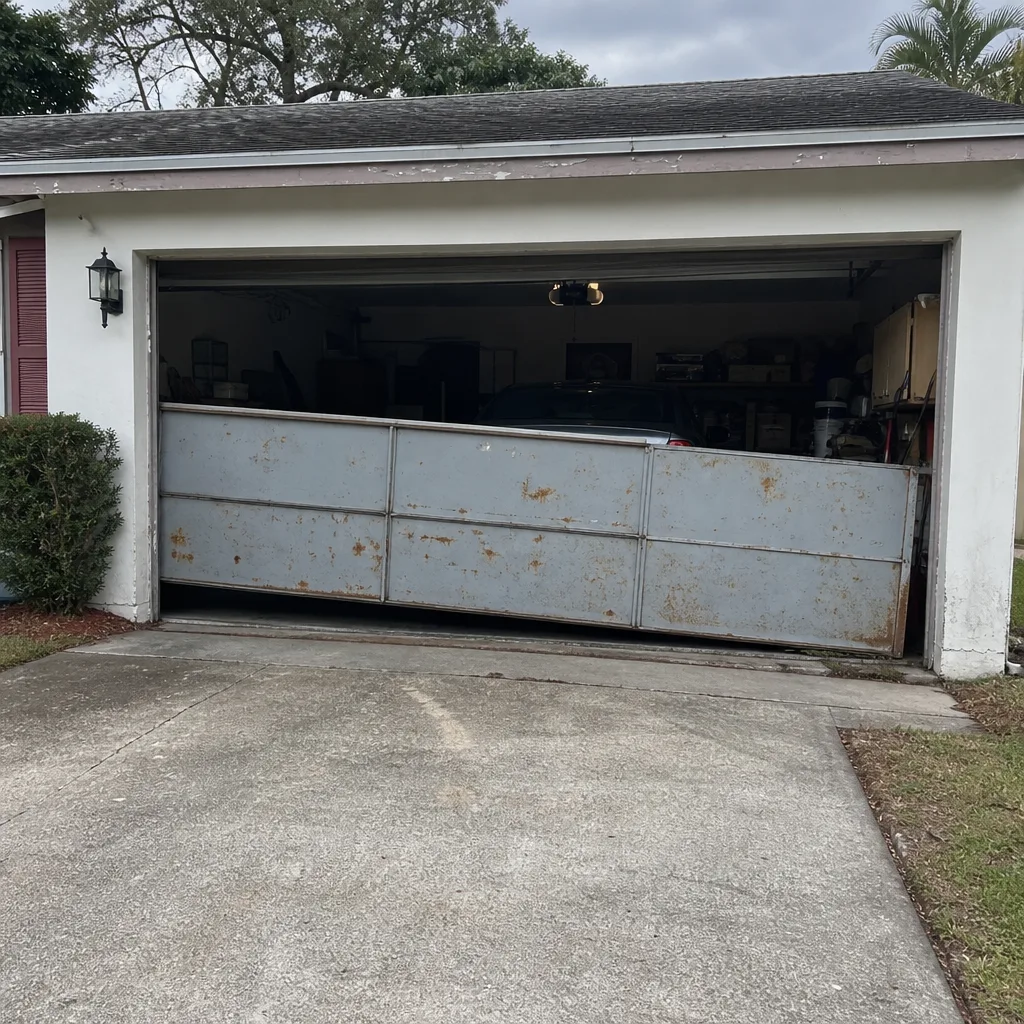
See the difference
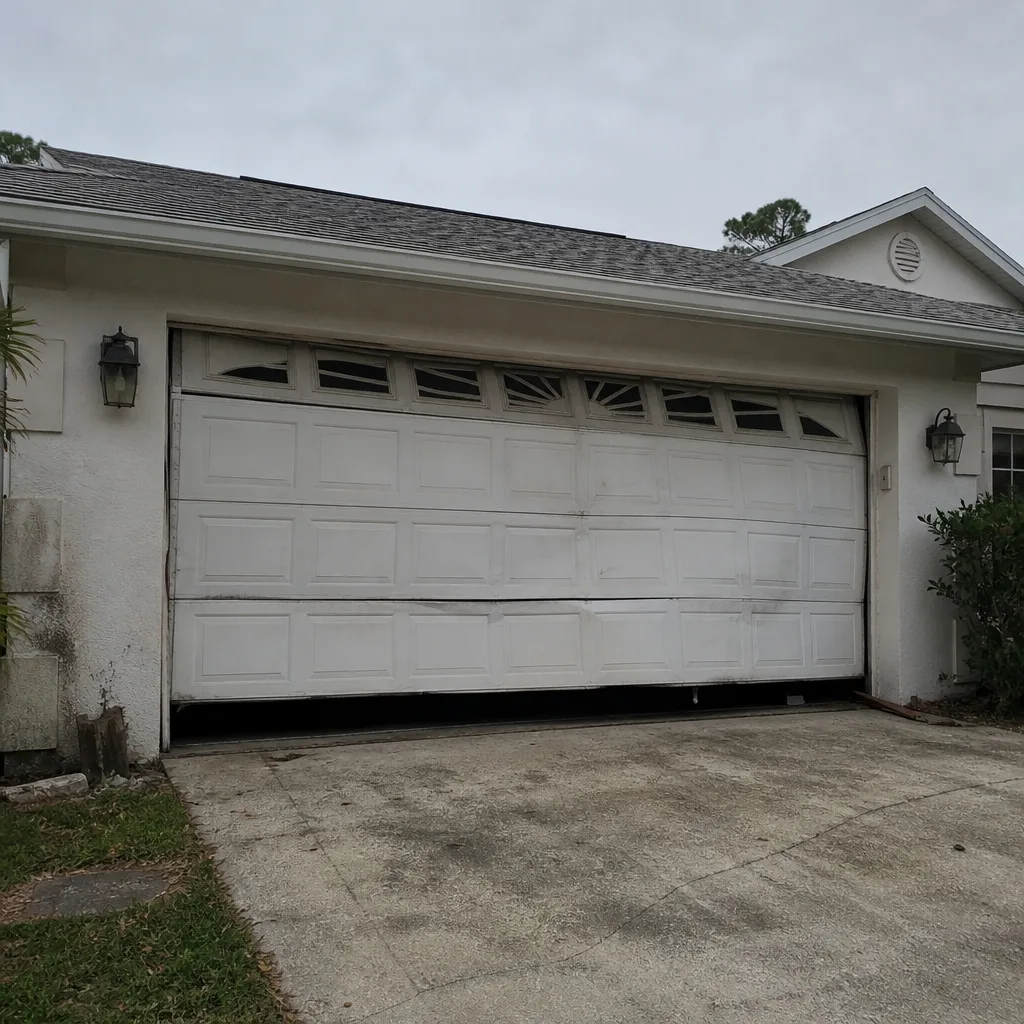 Before
 After
 Before
 After
 Before
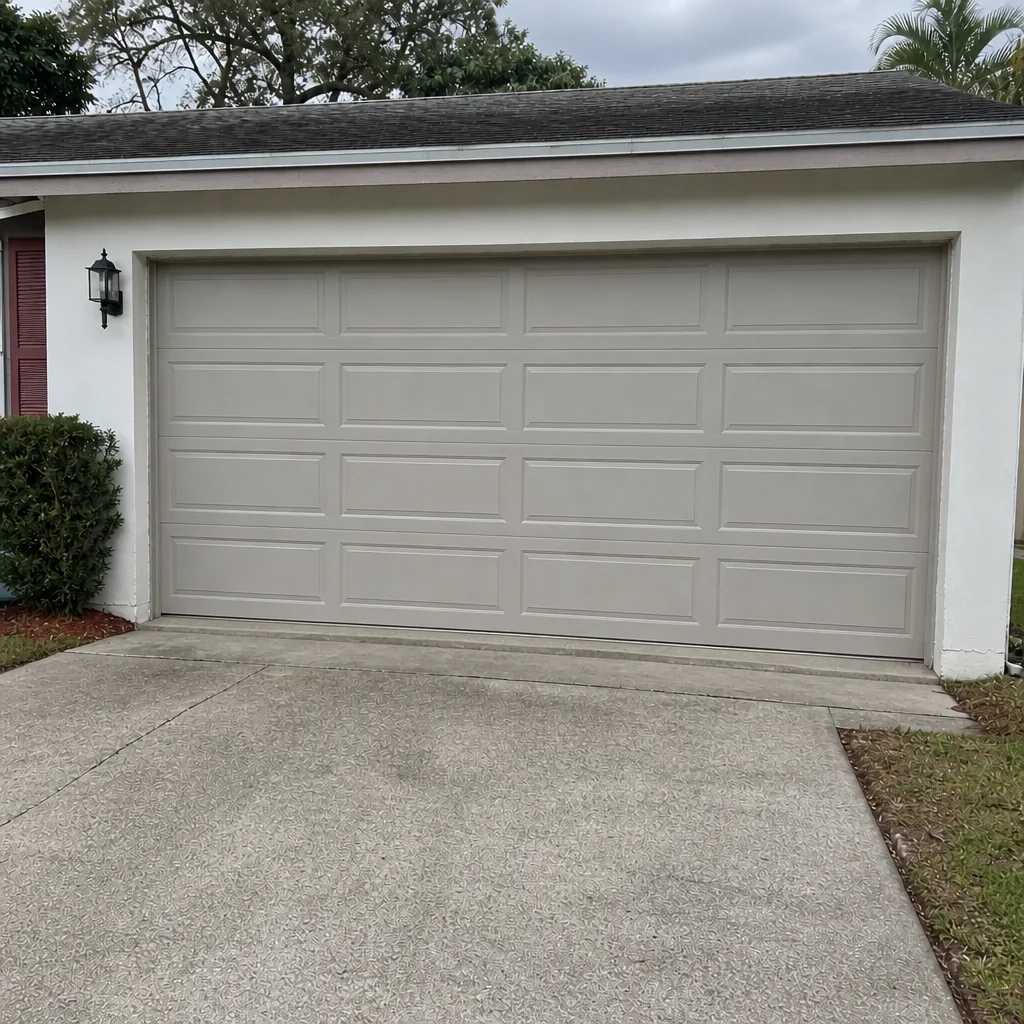 After
When to Call a Professional
Some parts of a garage door job are safe to handle yourself: lubricating rollers, replacing weather seals, and resetting a tripped breaker. The rest is where we’d stop and call in a technician. Torsion spring work is dangerous; the springs are under high tension and the tools and knowledge needed to unwind them safely are the difference between a repair and an injury. Panel replacement, track realignment, and anything involving the door’s anchoring should be done by a trained installer, both for safety and because the permit and product approval only cover an installation done to spec.
If you’re not sure whether your door needs a permit, or you’re facing a failed inspection or an open permit from a previous owner, that’s a good moment to get a professional eye on it. Jupiter Garage Door Repair Co offers free estimates in Jupiter – call (877) 492-2107. We answer 24/7. Fast dispatch from 7am to 7pm, Sunday through Friday. Our technicians have up to 14 years of experience, and they’re familiar with the HVHZ paperwork, the door models, and the opener systems that come with a Jupiter replacement. Whether the door is a LiftMaster opener paired with a Clopay carriage door, or a Genie unit on a legacy single-car door, the paperwork conversation is the same.
Frequently Asked Questions
Yes, in most cases. A full garage door replacement in Jupiter requires a building permit through the town or the county, and the door must carry a valid Florida Product Approval number for the HVHZ. Spring, track, and opener repairs usually don’t need a permit. Confirm the exact case with the building department before you skip it. Call (877) 492-2107 if you want a free estimate on the installation and the permitting. We answer 24/7.
A Florida Product Approval number is the state-issued identifier that proves a specific door assembly has been tested and approved for the wind zone where it’s being installed. It matters in Jupiter because Palm Beach County is in the High Velocity Hurricane Zone, and the permit office will not approve a door that doesn’t have one. Look the number up in the state database, check the revision is current, and keep it with your home records. Call (877) 492-2107 for an install estimate with the paperwork included. We answer 24/7.
A garage door inspection checks that the door is anchored to the structure using the fasteners and spacing the product approval specifies, that the track and jamb are secured correctly, and that the door panels and hardware match the approved assembly. If an opener is installed, the inspection also looks at the safety reverse function. The inspection result is what closes the permit. Call (877) 492-2107 to book a pre-installation assessment. We answer 24/7.
You can list it, but the unpermitted door will usually turn up during the buyer’s inspection, and the fix is either a retroactive permit (which requires the door to meet current code, not the code when it was installed) or a replacement. Both cost more than the original permit would have. Address it before listing so it doesn’t become a negotiation item or a closing blocker. Call (877) 492-2107 for a free estimate on getting the door code-compliant. We answer 24/7.
Florida carriers use permit records during storm claims, and a door installed without a permit may not be recognized as an approved improvement, which can complicate the payout on the door portion of a loss. It can also prevent you from claiming wind mitigation credits tied to impact-rated or HVHZ-compliant openings. If you’re unsure whether your current door was permitted, get a records check done before storm season. Call (877) 492-2107 to schedule an assessment. We answer 24/7.
Search the property address on the Town of Jupiter or Palm Beach County online permit portal and look for any garage door permit with a final inspection pass. Compare the door on the home to the permitted model, check the product approval label on the door itself, and ask the seller for the installation paperwork. A missing record isn’t automatically a red flag, but it’s worth pricing into the deal. Call (877) 492-2107 if you want a professional to review the door and the records with you. We answer 24/7.
The Bottom Line
In Jupiter, the garage door permit is the mechanism that forces the door you install to be HVHZ-compliant, properly anchored, and documented for the future. That documentation matters at three moments: when the inspection closes the permit, when you sell the home, and when a storm claim gets filed. A door that’s permitted and approved is an asset. A door that isn’t is a problem waiting on the right buyer or the wrong storm. Prices are estimates; the written price sets the final number. If you’re replacing a door, ask for the approval number and the permit cost before you sign. If you’re buying a home, check the record. If something doesn’t line up, that’s what we’re here for.
Whether it’s a spring that won’t lift, an opener drawing a fault code, or a full replacement that needs the right paperwork from the start, our team covers it. We work with the brands that matter on Jupiter doors and openers, including LiftMaster, Chamberlain, Genie and Clopay, and we’ll always tell you when the job needs the city involved. If you want a free estimate on the installation, the garage door opener repair, or the spring work behind it, call Jupiter Garage Door Repair Co at (877) 492-2107. We answer 24/7. Fast dispatch from 7am to 7pm, Sunday through Friday. For the full picture of what we handle, start at Jupiter Garage Door Repair Co. The written estimate is agreed before any work starts, so you’ll know exactly what the job involves, including the permit, before we pick up a wrench.
Written by the team at Jupiter Garage Door Repair Co.