
Last updated November 23, 2026
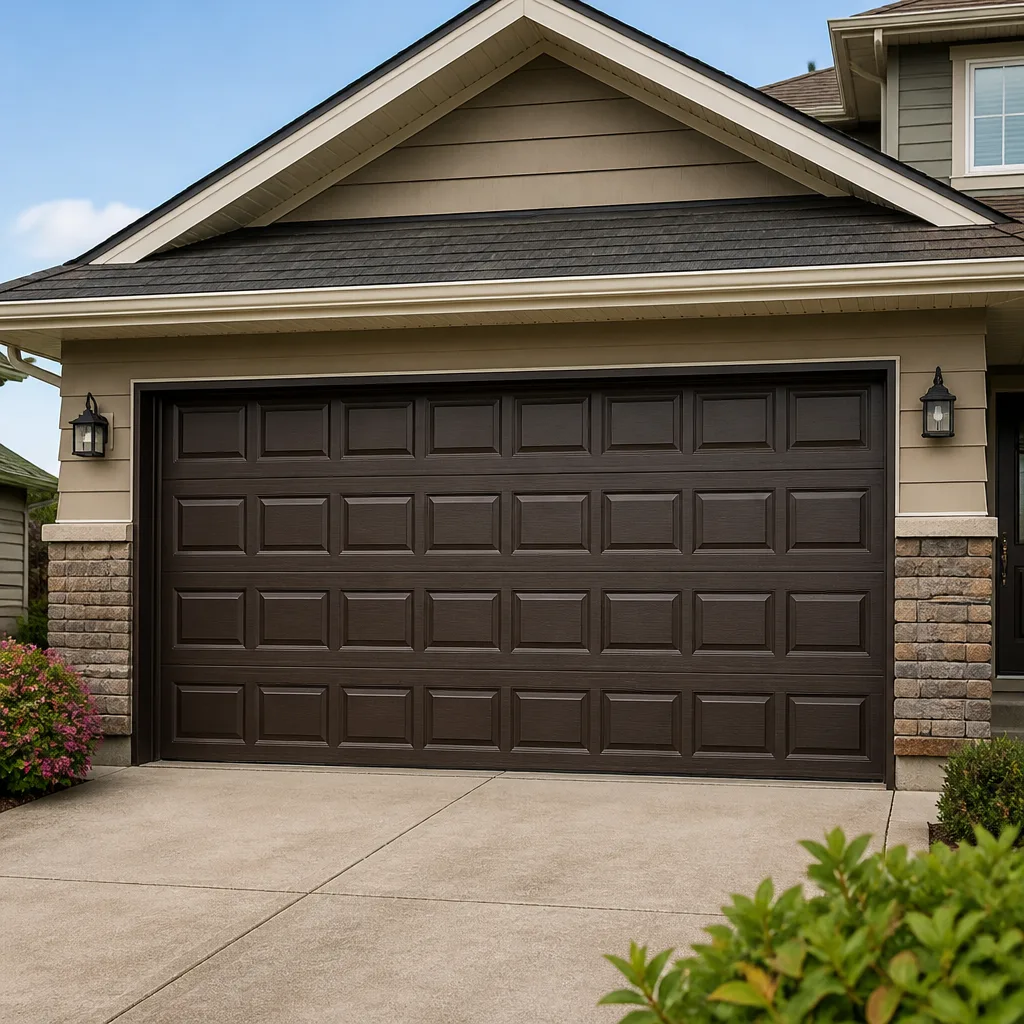 Raised-panel steel
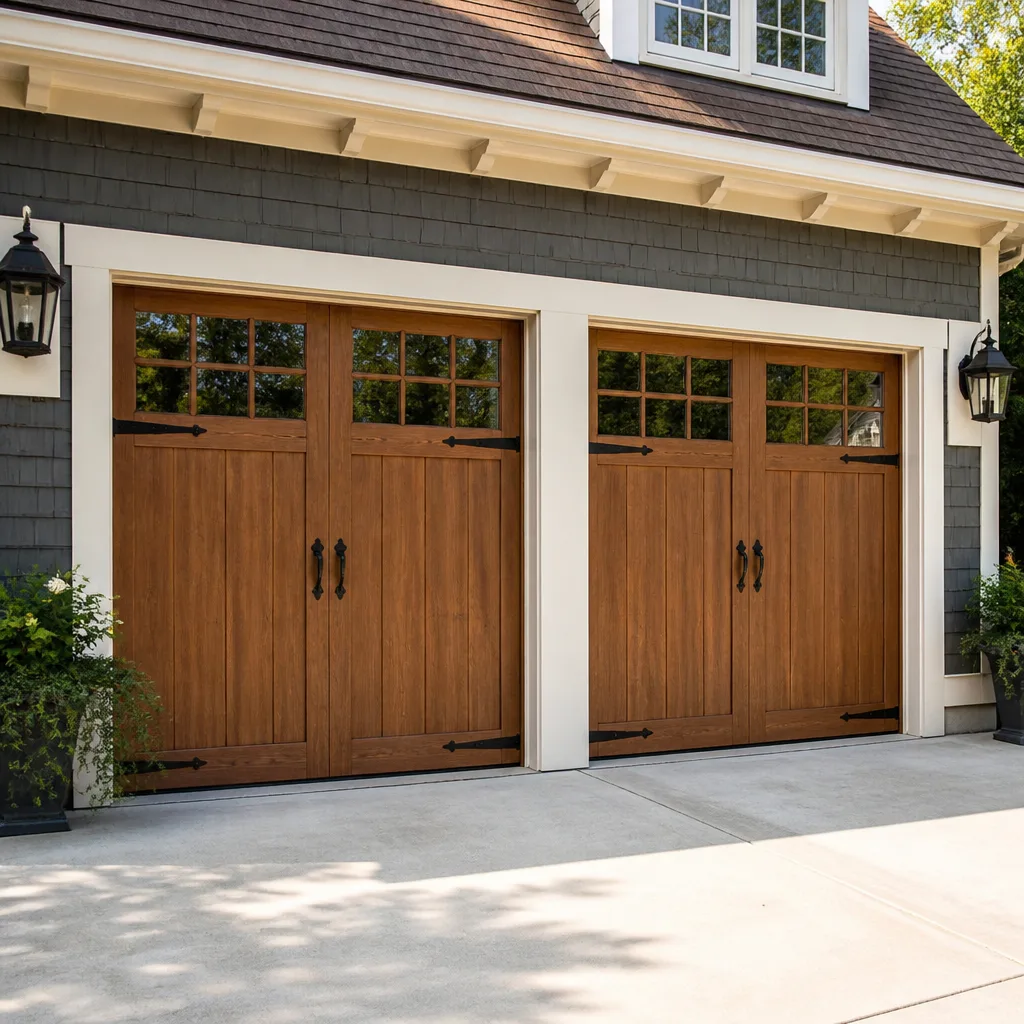 Carriage house
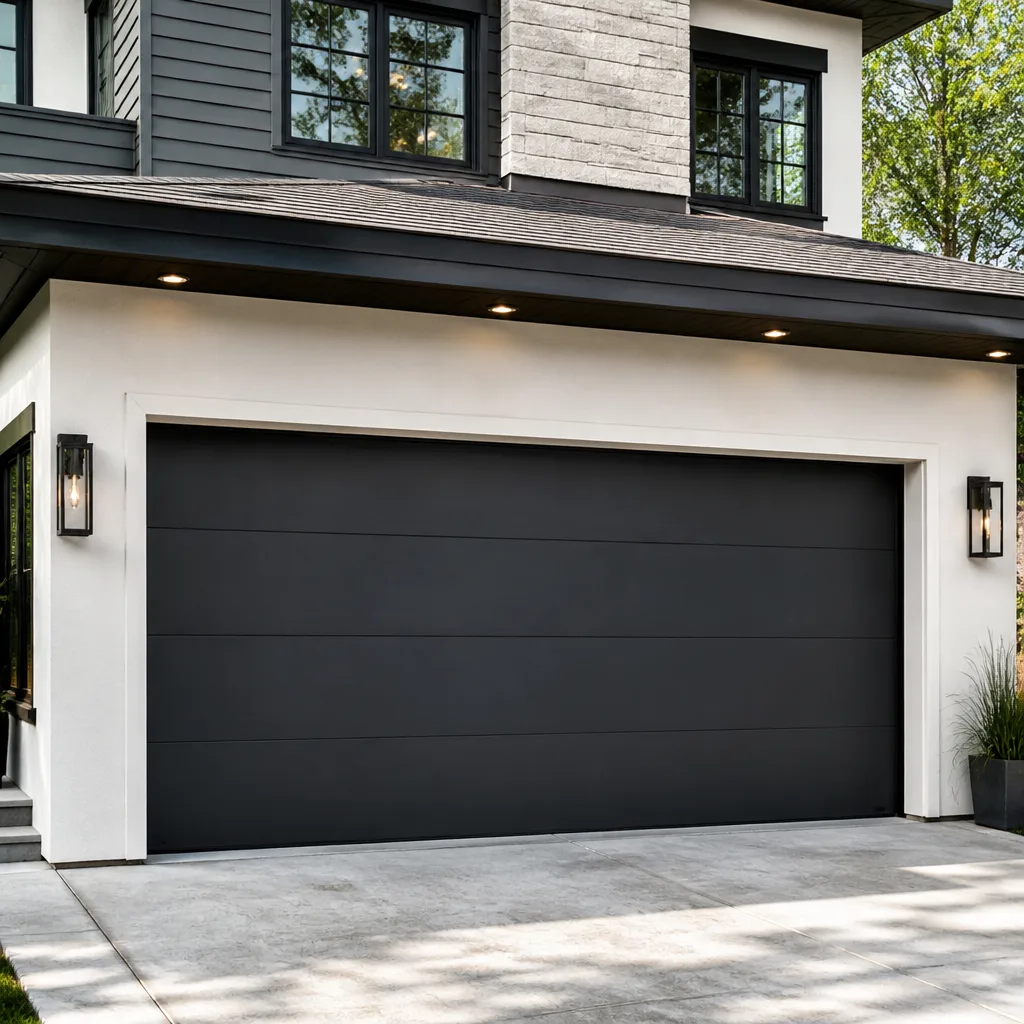 Modern flush
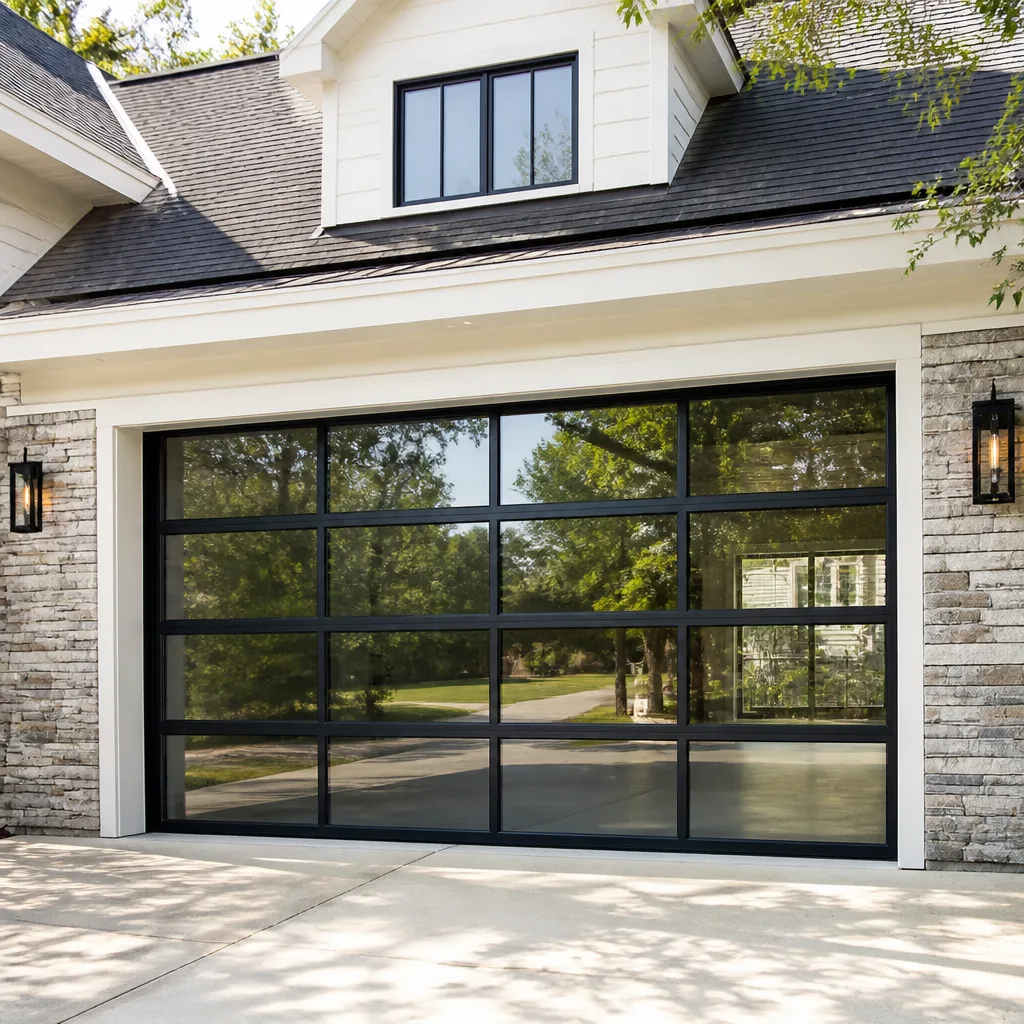 Full-view glass
 LiftMaster openers
 Chamberlain openers
Full 25-point door and opener safety check with every visit - springs, cables, rollers, tracks, and your LiftMaster or Chamberlain opener included
You get a price before we start. It does not change when the pro arrives.
Get your free estimateSeasonal Garage Door Care for Jupiter: Year-Round Homeowner’s Guide
Most garage door maintenance advice is written for a place with four real seasons, and it falls apart in Jupiter. There’s no long freeze to worry about and no spring thaw to prepare for. What we have instead is a wet season that runs from June through September and drops more than an inch of rain in a typical week, a dry stretch from November through March, and a hurricane window wedged in between. Each one wears a door down in a different way. A schedule built for the Midwest will leave your springs corroded and your seals swollen by August, and it won’t tell you a thing about getting ready for a named storm. This guide replaces the generic quarterly model with a care calendar built around the weather Jupiter actually gets. You’ll learn what to check and when, what you can do yourself, and where the work turns dangerous.
Quick Answer
In Jupiter, the garage door care calendar should follow the local weather, not the calendar quarters: inspect anchors, the bottom seal and the emergency release in April and May before storm season, run a humidity and rust watch through the wet season from June to September, assess alignment and tracks after any major storm, and schedule tune-ups, spring checks and cable replacement during the dry months from November to March. Weatherstripping in South Florida usually needs replacing sooner than the national two-year guidance because of steady UV exposure. The single biggest risk in any season is the torsion spring and its cables, which should only be handled by a trained technician.
Styles & brands we work with
- Raised-panel steel
- Carriage house
- Modern flush
- Full-view glass
- LiftMaster openers
- Chamberlain openers
Table of Contents
- Why Jupiter’s Weather Rewrites the Maintenance Playbook
- The Pre-Hurricane Season Checklist (April to May)
- Wet Season Protocol (June to September)
- Post-Storm Assessment: What to Check Yourself
- The Dry Season Opportunity Window (November to March)
- Weatherstripping and UV Degradation in South Florida
- Matching Care to Your Door and Opener Brand
- What You Can Check Yourself and What You Can’t
Why Jupiter’s Weather Rewrites the Maintenance Playbook
Garage doors fail from different things in different climates. In cold country, the enemy is thermal cycling and road salt. In Jupiter, the two forces that do the most damage are sustained humidity and strong sun, with hurricane season layered on top. Humidity attacks metal and anything with wood content. Sun breaks down rubber and vinyl. Wind and rain test hardware and alignment. Those three pressures don’t peak at the same time, which is exactly why a single spring-cleaning weekend once a year isn’t enough here.
The wet season is the piece most homeowners underestimate. When June rolls around and the afternoon storms start stacking up, the air inside a garage stays damp for months. Bare steel springs, hinges, rollers and track bolts all sit in that moisture, and rust starts where you can’t easily see it. Doors with wood composite sections absorb that same moisture and swell slightly, which changes how the panels meet and how the door seats against the frame. By the time the dry season returns in November, the damage is often already done.
In our experience across Jupiter, the doors that last the longest are the ones whose owners treat maintenance as weather-driven rather than calendar-driven. They check hardware before the rains, they clear rust through the summer, and they use the dry months to do the real repairs. If you’d rather hand the whole calendar to a specialist, our garage door repair service can take it from inspection to finished job.
The Pre-Hurricane Season Checklist (April to May)
April and May are the last calm stretch before the wet season and the hurricane window overlap, which makes them the best weeks of the year to confirm your door is ready for a storm. A garage door covers the largest opening in most homes, so how it performs under wind and rain pressure matters. The items below are the ones that decide whether your door holds up and whether you can still get your car out afterward.
- Inspect the anchor hardware. Look at the bolts holding the vertical tracks and the spring mounting plate to the wall. Any bolt that’s loose, backed out, or ringed with rust should be flagged for a technician. This hardware is what keeps the door attached to the structure when wind pushes against it.
- Check the bottom seal integrity. Run your hand along the rubber at the base of the door. Cracks, gaps or a seal that has pulled away from the bottom section let wind-driven rain straight into the garage. A worn bottom seal is one of the most common storm-season weak points we see in Jupiter.
- Test the emergency release. With the door closed, pull the release handle once to confirm it disengages the opener. Re-engage it and run the door through a full cycle. If the handle is stiff or the door won’t reconnect smoothly, the mechanism needs attention before storm season, not after.
- Look at the tracks for bends. A track that’s out of true can let the door bind under stress. Sight down each track for dents or kinks.
- Confirm the door reverses on contact. Place a roll of paper towels under the closing door. If it doesn’t reverse when it touches them, the safety system needs a technician’s eye.
- Clear the perimeter. Remove anything stored against the tracks or the door, and check that nothing leaning near the opening can become a projectile in high wind.
Getting through this checklist in April or May also means that if something needs a repair, you have time to schedule it calmly rather than in the middle of a storm warning. For any of these items that come back questionable, a spring or anchor problem is garage door spring repair territory and shouldn’t be put off.
Wet Season Protocol (June to September)
From June through September, Jupiter’s afternoon storms keep the air heavy and the garage damp. During those months, maintenance shifts from prepping for storms to protecting metal and wood from the daily moisture. The goal is to keep rust from taking hold and to catch swelling before it distorts how the door sits.
- Manage ventilation. Leave the garage door cracked for a while on dry mornings to let trapped humidity escape, and keep stored items off the floor and away from the tracks so air can move.
- Watch exposed hardware for rust. Hinges, rollers, track bolts and the spring assembly are the first to show it. A light, non-greasy protective spray on the rollers and hinges helps, but never oil the tracks themselves; they’re meant to run dry.
- Check wood and wood composite sections for swelling. If panels start binding or the door no longer seats flush at the bottom, moisture has likely found its way in. Swelling left alone can misalign the door and stress the opener.
- Keep the bottom seal free of debris. Wet-season debris and standing moisture under the seal accelerate rot and wear.
- Listen to the door. A new grind, squeal or rattle in the middle of summer usually means a roller or bearing has dried out or started to rust, and it’s cheaper to deal with it then than after it seizes.
- Check the opener’s force and travel settings if the door seems to strain. Opener brands like LiftMaster and Chamberlain have adjustment settings in their manuals, and a struggling opener in humid months is often the door telling you it needs attention.
A lot of the wet-season work is really opener work. When a door feels heavy or reverses oddly, the problem can sit with the motor or the safety sensors rather than the panels. Our garage door opener repair specialists can diagnose whether it’s the opener, the door balance, or both.
Post-Storm Assessment: What to Check Yourself
After a heavy rain or a windy night in Jupiter, you don’t need a technician for every check. A quick self-assessment can tell you whether you’re dealing with something routine or something that needs a pro. Walk through the following in order, and stop if anything looks unsafe.
- Look at the tracks from the floor. Sight up each track for bends, dents or separation from the wall. A visibly out-of-line track is a call-a-technician situation.
- Run the door a few inches and stop. If it moves evenly and stays put, the balance is probably okay. If it drops or fights you, don’t force it; that points to a spring or balance problem.
- Test the opener with the door disconnected. Pull the emergency release and operate the door by hand to separate opener issues from door issues.
- Check the bottom seal and frame for water intrusion. Standing water inside the garage after a storm often traces back to a worn bottom seal or gaps at the sides.
- Watch and listen to the opener. A motor that sounds strained or trips its safety reverse after a storm may be reacting to a door that’s no longer balanced.
- Inspect for debris in the tracks. Storm-blown leaves and grit cause most of the post-storm binding we see.
If any step turns up a bent track, a door that won’t balance, or a spring that looks damaged, that’s the point to stop checking and hand it to a technician. Springs and their cables are under extreme tension and can cause serious injury if handled without the right tools and training.
The Dry Season Opportunity Window (November to March)
November through March is when Jupiter dries out, and lower humidity makes this the smartest time of year to schedule the work that depends on accurate readings and stable conditions. A door that runs smoothly in dry air is easier to diagnose than one that’s fighting summer moisture, and repairs done now hold up through the next wet season.
This is the stretch to book a full tune-up: balance check, hardware tightening, roller inspection, a proper spring and cable inspection, and any cable replacement that’s due. Springs and cables that have been quietly rusting since summer are easiest to assess and replace when the air is dry. If your door has been making noise since July, the dry season is when to fix it rather than wait for it to fail.
It’s also the best time to plan a full garage door repair if you’ve been putting one off, because the repair will settle in while conditions are stable. Homeowners in neighborhoods like Abacoa, Admirals Cove, and Jupiter Farms tend to use the dry months for exactly this kind of planned work. A dry-season tune-up done well is the closest thing to insurance a garage door gets.
Weatherstripping and UV Degradation in South Florida
The common national advice is to replace weatherstripping every two years. In Jupiter, that schedule runs short. Strong, steady sun breaks down the rubber and vinyl seals faster here than in cooler climates, so a seal that would last two years up north can start cracking and losing its seal sooner in South Florida. The practical rule is to inspect rather than assume, and to replace when you see the signs.
Check the bottom seal, the side and top seals, and the threshold for cracking, brittleness, gaps or a seal that no longer touches the door. If the rubber feels hard or leaves a chalky residue on your finger, UV has done its work. Replacing a worn bottom seal before the wet season is one of the highest-value maintenance items on a Jupiter door, because it’s the main barrier against wind-driven rain. It also protects the door’s interior from moisture that accelerates rust and swelling. Weatherstripping is a job most handy homeowners can take on themselves with the right material, but if the threshold or the door’s bottom section is damaged, a technician should look before you replace.
Matching Care to Your Door and Opener Brand
Your maintenance calendar should account for what’s actually on your door. A Clopay steel door, an Amarr wood composite, and a Wayne Dalton door each respond to humidity and sun differently, and openers from LiftMaster, Chamberlain, Genie and Craftsman have their own adjustment procedures and safety features. Knowing the brand means knowing which parts to check and how the system is meant to behave.
- Steel doors mostly need rust watch on hinges, rollers and the spring assembly through the wet season, plus seal inspection.
- Wood composite doors need closer attention to swelling and moisture in the humid months, and to finish condition.
- Openers from the major brands have specific force, travel and safety-reverse settings; when a door struggles, the fix may be in the opener’s setup rather than the door itself.
- Mixed-brand setups are common in Jupiter rentals and multi-unit properties, which is why having one company that works across eight brands matters.
At Jupiter Garage Door Repair Co we work across LiftMaster, Chamberlain, Genie, Clopay, Amarr, Wayne Dalton, Craftsman and Raynor, so whatever brand is on your door, we know it. We don’t push one brand over another; you get service for the system you already have. Our technicians have up to 14 years of experience, and spring work is a named specialty we handle regularly rather than occasionally.
What You Can Check Yourself and What You Can’t
Knowing the line between a homeowner check and a professional repair keeps you safe and saves you money. The checks below are safe for anyone to do. The repairs listed as professional-only are the ones where a mistake can cause serious injury.
Safe homeowner checks
- Test the safety reverse with a roll of paper towels.
- Look at tracks for bends and hardware for loose bolts or rust.
- Inspect weatherstripping and the bottom seal for cracks and gaps.
- Test the emergency release and reconnect.
- Listen for new noises and watch for a struggling opener.
Professional-only work
- Torsion and extension spring replacement, and any work on the spring assembly.
- Cable replacement or adjustment.
- Straightening or replacing tracks that are out of line.
- Balancing a door that drops or fights you.
- Opener wiring and any electrical work.
Torsion springs store enormous energy, and cables are under constant tension. Attempting either without the right tools and training is how people get badly hurt. Leave those to a trained technician and use your own checks to describe the problem clearly when you call.
Common Mistakes to Avoid
- Following a Midwest maintenance schedule. A schedule built around freeze and thaw ignores the humidity and sun that actually wear doors in Jupiter. Build your calendar around the wet season, the dry season and the hurricane window instead.
- Skipping the pre-storm anchor check. Loose or rusted anchor hardware is easy to overlook and matters most when the wind picks up. Check it every April or May.
- Oiling the tracks. Tracks are meant to run dry; oil attracts grit and causes binding. Lubricate hinges and rollers, not the track surface.
- Ignoring a hard, chalky seal. UV damage doesn’t announce itself. If the rubber feels hard or leaves residue, it’s time to replace it before the wet season.
- Forcing a door after a storm. If a track is bent or the door won’t balance, running the opener can turn a small repair into a bigger one. Stop and call.
- Putting off spring and cable inspections until they fail. The dry season is when a proper spring inspection is most accurate and the fix holds through the next rainy stretch. Waiting until a spring breaks means dealing with it when the car is trapped.
- Assuming every brand needs the same care. A wood composite Clopay and a steel Amarr weather differently, and openers have their own settings. Match care to the system you have.
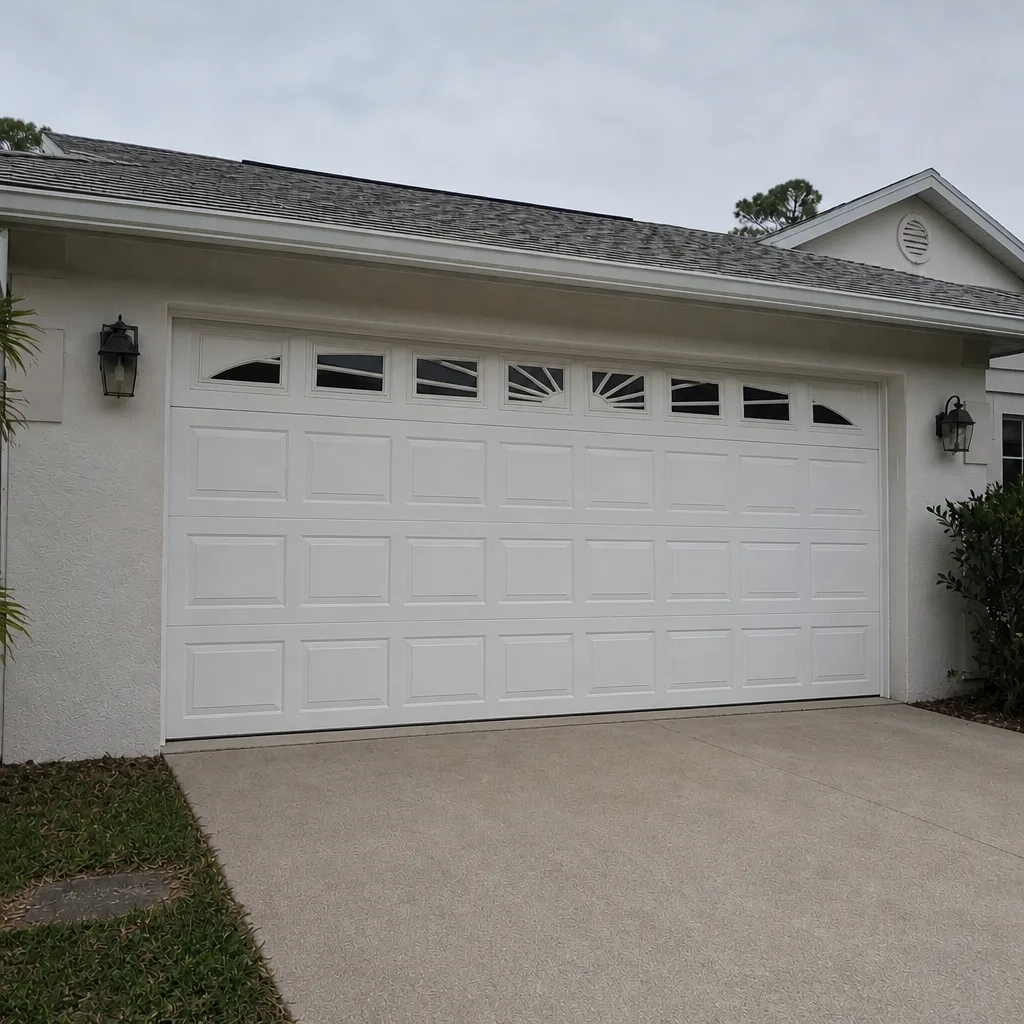
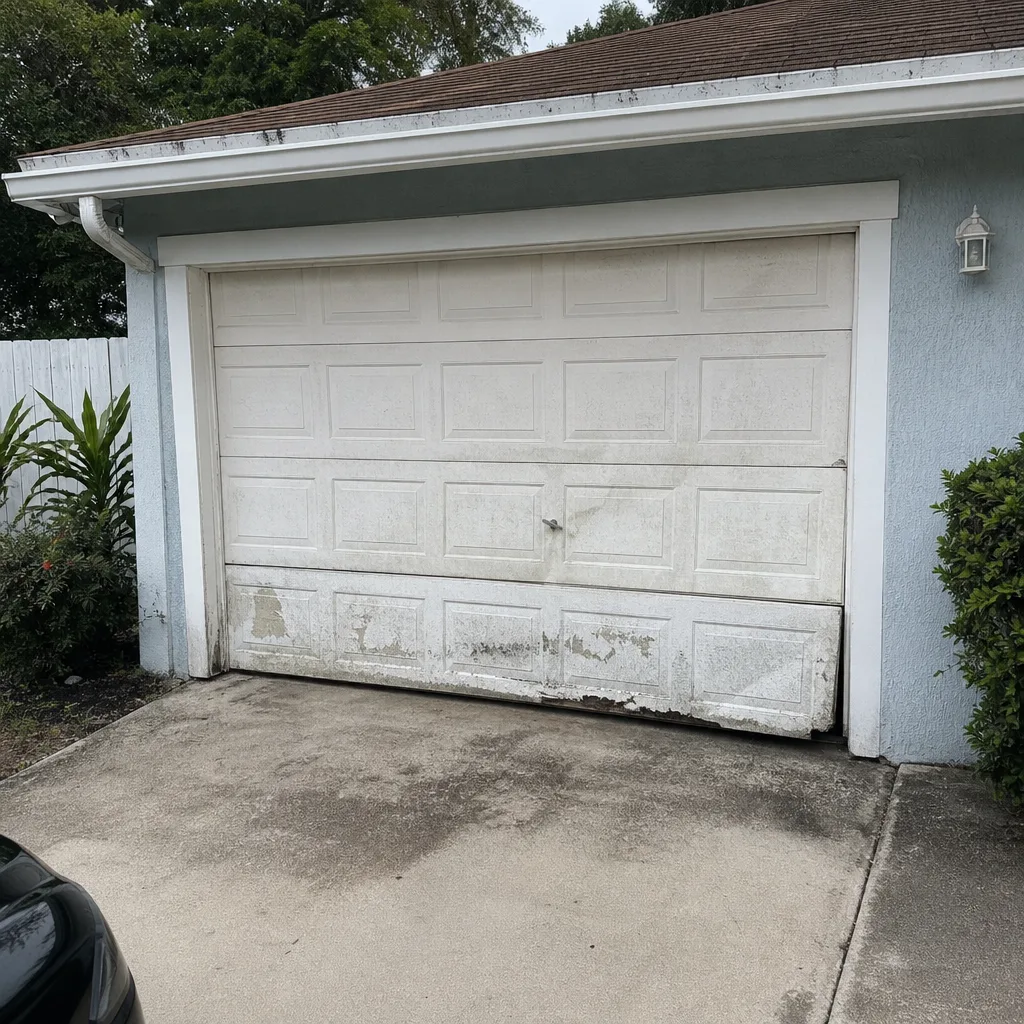
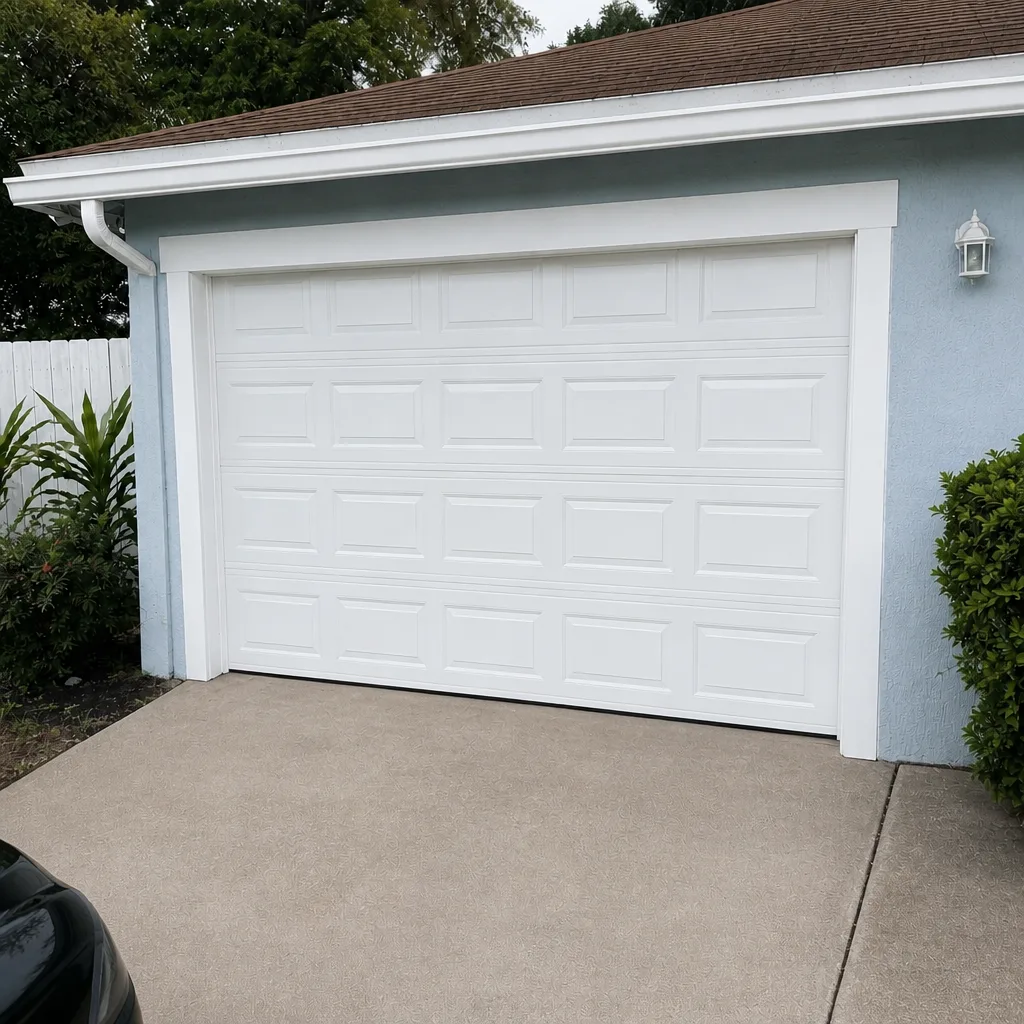
See the difference
 Before
 After
 Before
 After
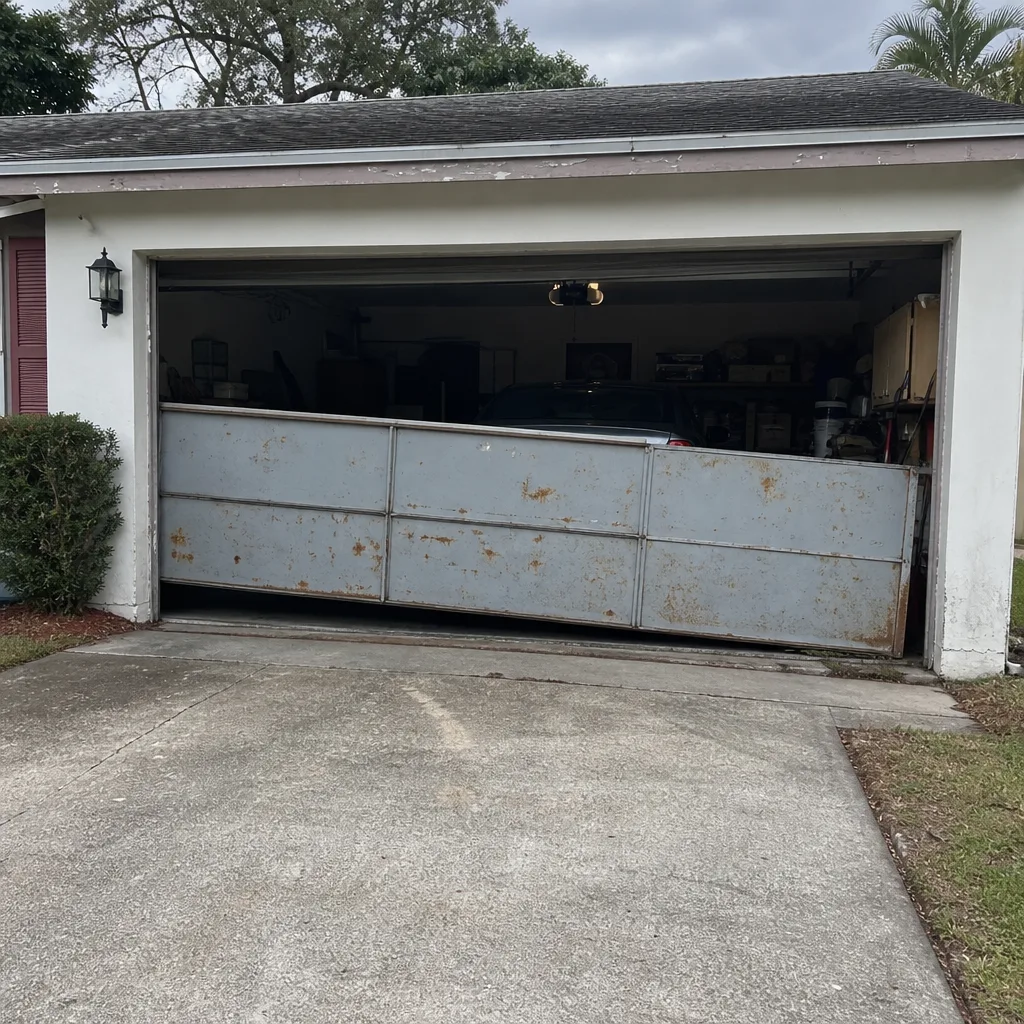 Before
 After
When to Call a Professional
Some jobs are yours to check, and some belong to a trained technician. Call a professional if a spring looks damaged or the door won’t balance, if a track is bent or out of line, if the door won’t reverse on contact, if the opener strains or won’t consistently operate the door, or if the door won’t stay connected to the opener after testing the release. Call immediately after any storm that visibly damaged the door or left it hard to move, and any time the door is stuck open with the car inside. Spring and cable work, in particular, is dangerous enough that it should never be a DIY project. Jupiter Garage Door Repair Co offers free estimates in Jupiter – call (877) 492-2107. We answer 24/7, with fast dispatch from 7am to 7pm.
Frequently Asked Questions
Once a year is the baseline for a Jupiter door, but the timing matters more than the interval. Schedule the main tune-up in the dry season from November to March, then run your own pre-storm checks in April and May and a humidity and rust watch through the wet season. Doors with wood composite sections or heavy use may benefit from a second look mid-summer. Call (877) 492-2107 for an exact quote – estimates are free.
Before hurricane season, check four things: the anchor hardware on the tracks and spring plate for loose bolts and rust, the bottom seal for cracks and gaps, the emergency release for smooth disengagement and reconnection, and the tracks for bends. Confirm the door reverses on contact using a roll of paper towels. Anything that looks questionable on the springs or cables should go to a technician rather than be forced by hand. Call (877) 492-2107 to schedule a pre-season inspection.
Wood and wood composite sections absorb moisture during Jupiter’s humid wet season and swell slightly, which can make panels bind or stop the door from seating flush. Steel doors don’t swell but their hardware rusts in the same damp air. The fix is to manage ventilation, catch swelling early, and repair any moisture intrusion before the dry season. If the door no longer runs smoothly, call (877) 492-2107 for a diagnosis.
Plan on inspecting rather than relying on a fixed schedule. The national two-year guidance runs short in Jupiter because of steady UV exposure, so check the bottom and side seals for cracking, hardness or chalky residue and replace when you see those signs. Replacing the bottom seal before the wet season is one of the best things you can do for a Jupiter door. Call (877) 492-2107 for help choosing the right seal.
You get a written estimate before any work starts, and the written quote is what you pay. We set the price per job by that written estimate, so the work is quoted and agreed before anything begins. Call (877) 492-2107 for an exact quote – estimates are free.
Yes. Jupiter Garage Door Repair Co connects you with independent local professionals who are state-licensed and insured as their state requires, and our technicians have up to 14 years of experience. We work across eight leading brands, including LiftMaster, Chamberlain, Genie and Clopay, and spring repair is a named specialty. Call (877) 492-2107 to get started.
The Bottom Line
Garage door care in Jupiter runs on the weather, not the calendar. Get your anchor hardware, bottom seal and emergency release checked in April and May before storm season. Keep rust and swelling in check through the wet months from June to September. Assess alignment and tracks yourself after a storm, and stop when a spring, cable or track turns dangerous. Use the dry season from November to March for tune-ups, spring inspections and any cable work, and replace weatherstripping when UV tells you to, not when a national schedule says two years. The one rule that never changes: springs and cables are trained-technician work. Do those and your door will handle a Jupiter year better than most.
Contact Us
When your seasonal checks turn up something you shouldn’t handle yourself, or your door won’t wait, Jupiter Garage Door Repair Co is here for it. Broken spring, dead opener, door off track, or a full tune-up, we cover the whole system across eight leading brands without sending you somewhere else. From a repair to a complete installation, we handle the job from diagnosis to finished work. Call (877) 492-2107 for a free estimate. We answer 24/7, with fast dispatch from 7am to 7pm, Sunday through Friday.
Written by the team at Jupiter Garage Door Repair Co.